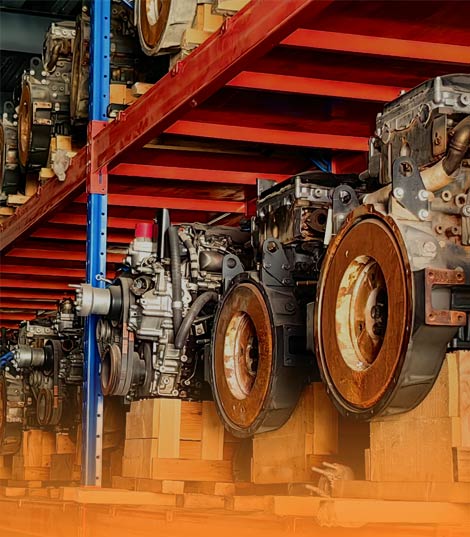
China’s construction machinery industry closed 2025 with its strongest export year on record, and the momentum has carried straight into 2026. Export figures released by the China Chamber of Commerce for Import and Export of Machinery and Electronic Products show construction machinery exports of USD 60.23 billion in 2025, up 13.9 percent year on year, with excavators reclaiming the position of the largest export category. Through the first five months of 2026, exports grew another 20.8 percent. For anyone who buys, sells or maintains construction equipment outside China, these numbers are not statistics in a trade report; they are the blueprint of where machines are going, which brands are winning, and what parts will be needed where.
The Record Export Numbers: 2025 and the First Half of 2026
China exported USD 60.23 billion of construction machinery in 2025, a 13.9 percent increase over 2024 and the highest figure in the industry’s history. Within that total, excavator exports reached USD 10.72 billion, up 30.4 percent, making the excavator the single largest export product category. Parts and components contributed USD 16.34 billion, up 12.3 percent, evidence that the aftermarket side of the trade is growing in step with machine sales.
The 2026 figures are even more striking. In the first five months of 2026, China’s construction machinery exports totaled USD 27.90 billion, up 20.8 percent year on year. Excavator exports in the same period reached 58,748 units, up 32.86 percent. Exports to Belt and Road countries came to USD 11.996 billion, representing 42.99 percent of the total, while exports to Africa surged 51.7 percent to USD 4.869 billion.
The cumulative effect is visible in the monthly sales data. August 2026 saw 19,716 excavators sold, up 19.3 percent year on year, with cumulative 2026 sales reaching 191,557 units, up 24.2 percent. First-half 2026 data showed 152,320 units sold, up 26.4 percent, with exports of 73,295 units, up 33.5 percent. The export engine is running at full throttle.
Why Chinese Excavator Exports Are Booming
Domestic Correction, International Expansion
The 2021-2024 correction in China’s domestic excavator market forced manufacturers to look outward. Having built enormous production capacity during the domestic boom, the major producers, XCMG, SANY, Zoomlion, LiuGong, Shantui and others, turned export growth into their primary strategy. That strategy has now paid off at scale: Chinese firms hold an estimated 35 percent share of global construction machinery sales, and the top five global manufacturers now command 58 percent of the market, with Chinese players among them.
Competitive Pricing and Improved Quality
Chinese machines have closed much of the quality gap that once limited their appeal. Combined with production-cost advantages, Chinese excavators now compete on price while offering specifications, emission compliance and service networks that meet international expectations. For price-sensitive markets across Africa, Southeast Asia and Latin America, the value equation is decisive.
Belt and Road Infrastructure Financing
Infrastructure projects financed through Belt and Road channels continue to pull Chinese machinery into partner countries. The share of exports to Belt and Road economies, 42.99 percent in the first five months of 2026, reflects both machine sales and the parts and service packages that follow them.
Electrification as a Differentiator
China leads the world in electric construction machinery development. New-energy construction machinery sales in China grew 78 percent in 2025 to about 43,000 units, and Chinese manufacturers are exporting electric excavators and wheel loaders to markets where emissions rules, fuel costs or power availability make electric machines attractive. This is a rare case of a Chinese industry leading, not following, global technology trends.
Where the Machines Are Going: Export Routes in 2026
Asia: The Largest Market
Asia remains the largest destination for Chinese construction machinery, with 2025 exports of USD 25.16 billion, up 16.5 percent and representing 41.8 percent of total exports. Southeast Asian markets, India and Central Asia are absorbing large volumes of excavators, wheel loaders and cranes, and each machine generates years of parts demand.
Africa: The Fastest-Growing Destination
Africa is the standout growth story. Exports to the continent reached USD 8.89 billion in 2025, up 50.5 percent, and grew another 51.7 percent in the first five months of 2026. Mining, infrastructure and agricultural development are driving demand for excavators, bulldozers and loaders. For parts suppliers, Africa represents an under-served aftermarket: the installed base of Chinese machines is young and growing, local parts distribution is thin, and reliable supply of genuine-spec components is highly valued.
Europe and North America: Selective and Regulated
Europe imported USD 12.96 billion of Chinese construction machinery in 2025, down 1.4 percent, and North America USD 4.42 billion, down 7.7 percent. Tariff policy, emission certification and trade friction have tempered growth in these markets, but they remain substantial, and Chinese manufacturers are responding with localized assembly and electric models that meet local rules.
Russia and the CIS: A Structural Shift
Following the departure of Western OEMs from the Russian market, Chinese manufacturers captured a dominant share of new machine sales. That installed base, built up since 2022, is now entering its heavy-maintenance years, and demand for parts in the CIS region has become a meaningful part of the export mix.
Who Is Leading the Export Push: The Global 50 Rankings
Chinese manufacturers now occupy prominent positions in the annual ranking of the world’s 50 largest construction machinery manufacturers. XCMG ranks third globally, SANY sixth, Zoomlion eleventh and LiuGong seventeenth, with Shantui and other Chinese producers also inside the top 50. These rankings matter for parts buyers because they signal scale, parts availability and aftermarket commitment. A manufacturer that sells tens of thousands of machines a year maintains parts production far beyond its own assembly lines, and its component ecosystems, engines, hydraulics, undercarriage and electronics, are increasingly standardized across models.
What the Export Boom Means for Excavator Parts Buyers
A Growing Global Fleet of Chinese-Built Machines
The most important consequence of the export boom is the installed base. Every excavator exported from China becomes a parts customer for the next ten to fifteen years. With Chinese excavator exports running at roughly 150,000 units a year, the global fleet of Chinese-built machines is expanding by hundreds of thousands of units per decade. These machines use a mix of Chinese-built components and internationally sourced systems, and aftermarket suppliers that carry genuine-spec parts for popular Chinese models, as well as for the Cummins, Deutz and other engines that power many of them, are positioned to serve a fast-growing segment.
Parts for Chinese Machines: What Buyers Need
The parts profile of Chinese-built excavators mirrors global machines: hydraulic pumps and valves from domestic and international suppliers, undercarriage components, filters, engine parts and electrical systems. What distinguishes the Chinese fleet is its youth and its operating environment. Many units work in mining and construction at high duty cycles in emerging markets, where maintenance intervals are stretched and parts availability is inconsistent. This creates a strong aftermarket for durable replacement parts: heavy-duty track groups, reinforced buckets, reliable hydraulic seals and filters that can handle abrasive dust conditions.
Cross-Brand Compatibility
Chinese excavator manufacturers have adopted a pragmatic approach to components, using well-known international brands where they add value. Cummins engines power a wide range of Chinese excavators and wheel loaders, and the hydraulic systems of many Chinese machines are compatible with internationally standardized pump and valve families. Parts buyers with catalog knowledge that spans both the machine brand and its component suppliers will find that the same pump, filter or seal family serves multiple machines.
Trade Policy and Parts Supply in 2026
Export growth has not been frictionless. Tariffs on Chinese machinery in North America, antidumping reviews and local-content rules in some markets are shaping how manufacturers sell, with local assembly and regional parts stocking becoming more common. For parts buyers, the practical effect is mixed: tariffs have pushed up the cost of some imported undercarriage and structural components, while the expansion of local distribution networks has improved parts availability in key regions. Buyers should compare total cost, including freight, duty and lead time, rather than list price alone, and suppliers with regional warehouses or fast international shipping have a clear advantage.
How to Buy Parts for Chinese-Built Excavators in 2026
Five practical recommendations emerge from the 2026 export data. First, identify the component origin of the machine: engine make, pump family and track group all affect which part numbers apply. Second, use the machine serial number, not just the model name, to confirm compatibility, since Chinese manufacturers update component sourcing between build years. Third, stock consumables ahead of the season; filters, seals, hoses and wear parts for Chinese machines are widely available, but delivery times vary by region. Fourth, work with suppliers who can cross-reference part numbers across machine brands, since shared component platforms are common. Fifth, for major components such as main pumps, final drives and complete track groups, confirm availability before committing, and prefer suppliers with actual stock over those who only take orders.
Buyers who follow these practices will find that the Chinese export boom is not a threat to their parts supply; it is an opportunity. A larger global fleet, more standardized components and an expanding aftermarket ecosystem mean more options, better prices and shorter lead times than at any point in the industry’s history.
The Outlook: What Comes Next
The export momentum shows no sign of easing. Mid-2026 data point to another record year, with excavator exports up a third and overall construction machinery exports up a fifth. As the Chinese fleet ages abroad, the aftermarket opportunity will grow faster than the new-machine market, because every exported machine becomes a multi-year parts customer. The next five years will see the global installed base of Chinese-built machines double, and with it the demand for genuine-spec replacement parts, service expertise and reliable supply chains.
For parts suppliers and buyers alike, the lesson of 2026 is to treat the Chinese export boom as a permanent feature of the global construction equipment market, not a temporary surge. The machines are already in the ground, the parts demand is already compounding, and the suppliers who prepared for this fleet are the ones who will serve it.
Financing and Payment Trends in Cross-Border Parts Trade
The financial side of cross-border machinery trade is changing as fast as the machines. Export financing, buyer credit and payment terms have evolved to support the flow of machines and parts into emerging markets, where buyers increasingly expect flexible terms rather than simple letters of credit. For parts buyers, the practical implication is that payment terms, currency and delivery terms are now negotiable elements of the purchase, and suppliers who can offer workable payment structures have a competitive advantage in price-sensitive markets.
Currency and Pricing Strategy
Cross-border buyers in 2026 face a more complex currency environment than in previous years. Chinese suppliers increasingly quote in US dollars for international sales, while some offer renminbi pricing with settlement options. Buyers should compare the total landed cost in their own currency, including exchange risk, duty and freight, and should consider locking prices with suppliers on longer lead-time orders. The most effective buyers in the current market build currency awareness into their procurement planning rather than treating it as an afterthought.
Duty and Local Content Rules
Trade policy has made duty calculation part of parts procurement. Some markets impose tariffs on imported Chinese components, while others are introducing local content rules that favor domestic assembly. Buyers should understand the duty classification of the components they import, since the same physical part can carry different duty rates depending on classification and origin, and should work with suppliers who can provide the documentation needed for clean customs clearance. A part that is held in customs is a part that is not working, and documentation quality has become a real procurement factor.
The Service and Support Ecosystem Around Chinese Machines
Machine sales are only the first act of the Chinese export story. The manufacturers who are winning the export race are investing in the service ecosystem that follows their machines: training programs for local technicians, regional parts warehouses, diagnostic support and operator manuals in multiple languages. For buyers of Chinese machines, the quality of this local support matters as much as the machine’s specification, because a machine is only as good as the parts and knowledge available when it needs service.
Independent aftermarket suppliers play a critical role in this ecosystem. In many markets, the local dealer network of a Chinese manufacturer is still maturing, and independent suppliers with genuine-spec parts, cross-reference knowledge and fast shipping fill the gap. This is particularly true for older Chinese machines, which are often not a priority for the manufacturer’s official parts network but remain valuable working assets for their owners. The aftermarket for Chinese machines is therefore a two-layer market: official parts through the OEM network for newer machines, and independent genuine-spec parts for the broader installed base.
Training and Diagnostics as Market Builders
The most forward-looking Chinese manufacturers are treating training as part of the export package. Local technicians trained to service the machines, understand the diagnostic systems and source the correct parts create a durable market for the brand. For independent parts suppliers, this is both a challenge and an opportunity: a better-trained technician base raises service quality across the market, while the growth of the machine population creates more demand than the official networks alone can serve. Suppliers who invest in technical knowledge of Chinese machines, their engine families, hydraulic systems and electrical architectures, are building assets that will pay for a decade.
Rental, Leasing and the Second-Hand Chinese Fleet
Another structural trend is the growth of rental and leasing in the markets receiving Chinese machines. Rental penetration in Africa, Southeast Asia and Latin America is still low by Western standards, but it is rising, and Chinese manufacturers have been active in supplying rental fleets with durable, cost-effective machines. Rental machines accumulate hours fast and are serviced on strict schedules, which creates steady, predictable parts demand. At the same time, the second-hand market for Chinese machines is developing rapidly: machines that complete their first ownership cycle are being resold across borders, often moving from stronger to weaker economies, and each resale extends the parts demand horizon.
For parts buyers, the second-hand Chinese fleet is a market with distinctive characteristics. Used machines are frequently purchased without complete service history, which makes preventive replacement of critical components, filters, hoses, seals and wear parts, part of the purchase process. Buyers of used Chinese machines should budget for an initial service package, and suppliers who offer pre-packaged service kits for popular Chinese models, engine oil and fuel filters, hydraulic filters, seals and belts together, are addressing a real and growing need.
Quality Assurance and the Reputation Question for Chinese Parts
The fastest-growing debate in the aftermarket is about the quality of Chinese-made components, and 2026 data points to a maturing market. Chinese parts manufacturing has bifurcated into two tiers: a quality tier that produces genuine-spec components for export, tested, documented and warrantied, and a commodity tier that competes on price alone. The parts buyers who succeed in the current market have learned to distinguish the two, because the price gap between them is small while the reliability gap is large. The markers of the quality tier are documentation, testing evidence, warranty terms and the supplier’s willingness to stand behind the product.
What Genuine-Spec Means in Practice
Genuine-spec does not mean OEM-identical; it means components that meet the original manufacturer’s specifications for material, dimension and performance. A genuine-spec pump or seal kit is interchangeable with the OEM part and performs to the same standard, at a price that reflects the supplier’s costs rather than the OEM’s brand premium. The discipline required to maintain genuine-spec quality, material certification, dimensional control and batch traceability, is what separates the quality tier from the commodity tier, and buyers should expect suppliers to demonstrate it.
Testing and Documentation
The quality tier of Chinese parts manufacturing has invested in testing that was rare a decade ago: pressure testing of hydraulic components, material analysis of castings and forgings, and durability testing of wear parts. Suppliers who publish test data and provide certificates of conformity are serving the export market seriously, and buyers should ask for documentation as a routine part of ordering. In 2026, documentation is not a burden; it is the difference between a supplier you can build a fleet around and a supplier you gamble with.
Racer Machinery is a professional supplier of genuine-spec excavator spare parts covering engine, hydraulic, undercarriage, electrical and work equipment components for major machine brands including Caterpillar, Komatsu, Hitachi, Cummins, Volvo and Hyundai, as well as popular Chinese-built machine families. With a wide parts catalog, competitive pricing and worldwide shipping, Racer Machinery supports excavator owners, workshops and dealers in keeping their fleets working. Contact our team with your part numbers for a fast quotation and reliable delivery.