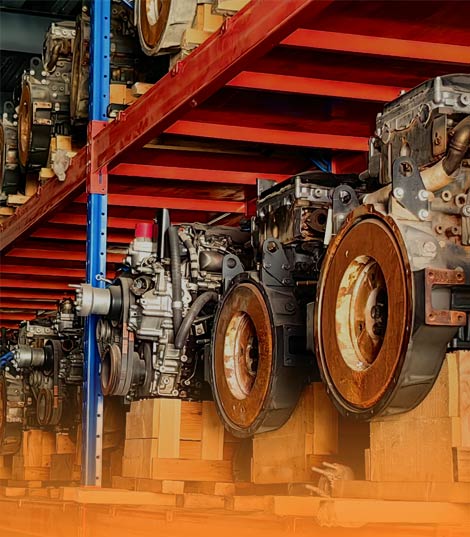
The Individual Parts Buyers Search For: A 2026 Ledger of Single-Component Demand
The 2026 excavator aftermarket is worth roughly 35 billion dollars, and almost every report that covers it stops at the category level – undercarriage, hydraulics, engine, electrical. That view is useful for sizing the market, but it hides the thing that actually drives a procurement decision: the individual part. Behind every category number is a specific component with its own failure mode, its own lifecycle and its own search curve. This article reads the year through that finer lens – the single parts buyers type into a search box – because the fleets that win on downtime are the ones that understand the part, not just the category.
It matters now more than ever. The average machine in service has reached about twelve years of age, and the equipment delivered during the last big expansion is moving into heavy maintenance at the same time. The global installed base is expected to pass 250 million units in 2026, and stock (replacement) demand already accounts for around 68 percent of the total market – far more than new-machine fitment. Every one of those machines is a future list of individual part numbers, and the search data shows which numbers are climbing first.
Track Chains: The Single Most-Searched Wear Part
Within undercarriage – itself a 7.5 billion dollar segment growing at better than 8 percent a year – the individual track chain is the component searched most often. It is the backbone of the wear system: the link that everything else depends on. Its search volume tracks machine hours and abrasive ground conditions rather than any calendar event, and it climbs first when a fleet works harder or moves onto rock and quarry work. A chain search is a signal that the whole undercarriage is due, not just the link – which is why the search data increasingly pairs ‘chain’ with ‘matched set’, as buyers learn to replace the wear system together rather than repeat the teardown.
Seal Kits: The Hydraulic System’s Quiet Signal
Nearly 70 percent of excavator failures trace back to the hydraulic system, and among individual hydraulic parts, the seal kit is the most searched. That is not a coincidence. Seals fail predictably as a cylinder’s rod and bore wear, so a seal-kit search is almost always a pre-emptive one – a buyer ordering ahead of a weep that has not yet started. Hoses and fittings follow the same pattern: they fail from pressure cycling and abrasion, and a high-pressure hose failure is both an operational stop and a safety event. The search data shows fleets turning these predictable individual parts into buffer stock rather than emergency orders, and that single habit removes more unplanned downtime than any category-level plan.
Fuel Injectors: The Engine’s High-Value Individual Part
In the engine segment – the largest by revenue – the individual injector is the component searched with the most economic weight. Tighter emissions steps have made injection, exhaust-gas-recirculation and aftertreatment parts stable, high-value categories that fleets return to repeatedly. An injector search usually means a performance symptom: smoke, rough running, a fault code. It is a higher-stakes individual part than a seal, because a wrong or worn injector damages the calibration it feeds. The search signal here is about precision and fitment, not just availability – the buyer is looking for the exact unit for a specific engine serial, not a generic match.
Water Pumps: The Cooling System’s First Line
The water pump is the individual part whose search volume tracks overheating season and coolant neglect. It is the first line of the cooling system’s defence, and a pump that weeps from its weep hole is a warning the buyer is wise to act on before a warped head turns a seal into an engine. Search interest in water pumps and thermostats rises with ambient temperature and with fleets that stretch coolant-change intervals – a clear, weather-driven individual-part curve that a stockroom can anticipate by climate rather than by guess.
Filters and Lubrication: The Steady, Scheduled Individuals
Filters never trend, and that is exactly the point. Search volume for filter heads, spin-on elements and service kits is flat year-round because their interval is driven by hours and contamination, not by drama. The 2026 data shows buyers grouping filtration with the high-value categories into a single planned order rather than reacting to a bypassed filter’s downstream damage. These individual parts are perfectly suited to depth stock: cheap, frequently needed, and catastrophic if skipped.
Sensors and Electronic Modules: The Electrification Frontier
The fastest-emerging individual-part searches are in electronics – pressure and temperature sensors, control modules, and, as machines electrify, battery, motor and controller components. The electric-parts market is on track to exceed 35 billion yuan in 2026, growing around 42 percent a year. A sensor search is a diagnostic-part signal: the buyer knows the symptom and needs the exact measuring unit. These individual parts punish approximation hardest – a sensor with the wrong range prompts a false derate – so their search curve rewards suppliers who verify the part against the machine rather than quoting by appearance.
Swing and Travel Bearings: The Rotation System’s Individual Load
Two individual parts the search data underrates are the swing bearing and the travel-motor bearing. They sit in the dirtiest, most load-cycled part of the machine, and their failure turns a productive excavator into a stationary one. Query growth for swing seals and travel bearings points to a maturing awareness that these deserve pre-emptive stock. Like undercarriage, they are wear systems whose neighbours matter: a new seal against a pitted race repeats the teardown. The individual-part search here is a prompt to stock the related set, not the single ring.
Bushings, Pins and Couplings: The Structural Individuals
Beneath the headline components sits a large, fragmented group of structural wear items – bushings, pins, couplings, linkage hardware. No single one dominates the search curve, but together they represent steady, recurring demand that grows with the machine base. The implication for stockists is to treat these as a managed category with its own fitment rules, because a bushing that does not fit the bore is useless regardless of price, and the individual part is only as good as its dimensional match.
Compact and Mini: A Different Individual-Part Mix
Beneath the headline categories, the data shows above-average growth in compact and mini-excavator components – their own track systems, hydraulic actuators, swing components and attachments. Urban construction, landscaping and utility work are pushing the installed base of small machines up, and every machine added is a future individual-part customer with a different mix than its large sibling. A swing seal for a mini is not the same part as a swing seal for a large excavator, and the search data is already splitting along that size line.
What a Single Part’s Search Volume Tells You
Read individually, each part’s search volume decodes a different intent. A track-chain search signals a system-wide undercarriage event. A seal-kit search signals a predictable pre-emptive order. An injector search signals a performance fault needing exact fitment. A water-pump search signals a seasonal or neglect-driven risk. A sensor search signals a diagnostic need for a precise unit. The category average hides all of this; the individual part reveals it. Fleets that read at the part level stop treating ‘hydraulics’ as one job and start treating ‘seal kit for cylinder X on machine Y’ as the actual, schedulable task.
Turning Individual-Part Signals Into a Stock List
The practical payoff is a stock list built from part-level demand rather than category intuition. The fast-moving individual parts – chains, seal kits, hoses, filters, common sensors – earn depth and a standing reorder. The high-value, lower-velocity individuals – injectors, control modules, pumps – earn a confirmed lead time and a verified cross-reference, not shelf space. The long tail earns a supplier who can source on demand. The search data tells you, per part, which bucket each belongs in, and the stockroom that follows it spends the year’s demand growth on uptime rather than on freight and waiting.
The Cost of Ignoring the Part Level
The penalty for ignoring individual-part demand is paid twice. First as emergency freight, when the fast-moving part is ordered during the surge and waits behind every other fleet. Second as dead stock, when the buyer stocks the category in the wrong individual mix and the actual parts that fail sit unstocked. The category plan cannot see this; the part-level ledger can. A track chain ordered in the quiet weeks arrives by sea on schedule; the same chain ordered during the rush waits in a queue behind competitors who read the part first.
Building the Right Relationship
The supplier question follows directly from the part lens. A source that carries the individual part – not just the category – and that verifies each part number against the machine’s serial before dispatch, lowers both the landed cost per part and the risk of a wrong fitment. The 2026 search data does not name suppliers, but it makes the selection criteria obvious: breadth at the part level, verification before shipping, and consolidated mixed shipments so several individual parts arrive as one managed order.
Conclusion
Attachment Wear Parts: Breakers, Couplers and Thumbs
The attachment market – breakers, quick couplers, hydraulic thumbs and the pins and seals that connect them – is worth close to 8 billion dollars and grows because attachments wear fast and get worked hard. At the individual-part level, the highest search velocity is not the big tool but its consumables: the pin, the seal, the bushing that keeps the attachment locked to the linkage. A buyer searching for a thumb seal is not shopping for a thumb; they are keeping the one they own working. The lesson for a stockroom is that attachments are a managed category with their own individual-part rules, and an attachment part that does not fit the linkage is useless regardless of price.
The Stamped Part Number Is the Real Search Unit
Underneath all of this sits the unit the buyer actually types: the stamped part number on the old component. Categories are how analysts talk; part numbers are how buyers act. A track-chain search, a seal-kit search and an injector search all resolve to a specific stamped number before they resolve to a category, and the number is what the supplier must verify against the serial. The individual-part ledger is, in the end, a ledger of part numbers – each tied to the machines it fits – and the 2026 search data is simply the aggregate of millions of those individual lookups. Read at that grain, the market stops being a set of category bars and becomes a living list of the exact components fleets are reaching for.
Reading a Maturing Fleet One Part at a Time
As the average machine passes its twelfth year, the individual-part search mix shifts in a predictable way. Early in a machine’s life the searches are dominated by wear parts – chains, seals, filters. Later they tilt toward engine internals and electronic modules as hours accumulate and emissions hardware ages. A stockroom that watches this part-level migration, rather than a single annual category forecast, adds depth to the right individual parts at the right moment and avoids being short of the components a maturing fleet actually starts to consume.
The 2026 aftermarket is one of the most honest demand signals the industry produces, but its real detail lives at the level of the individual part, not the category. The track chain, the seal kit, the injector, the water pump, the sensor – each carries its own failure mode, its own lifecycle and its own search curve, and together they are what a stockroom actually buys and a machine actually consumes. Buyers who read demand at the part level turn a category plan into a schedulable list of specific components, and they spend the year’s growth on uptime rather than on freight and waiting. Racer Machinery supplies brand-new undercarriage, hydraulic, engine and electrical parts at the individual-component level, with fitment verified against your machine details and consolidated mixed shipments to more than one hundred countries, so your stockroom can stay one step ahead of the parts your machines will actually need.