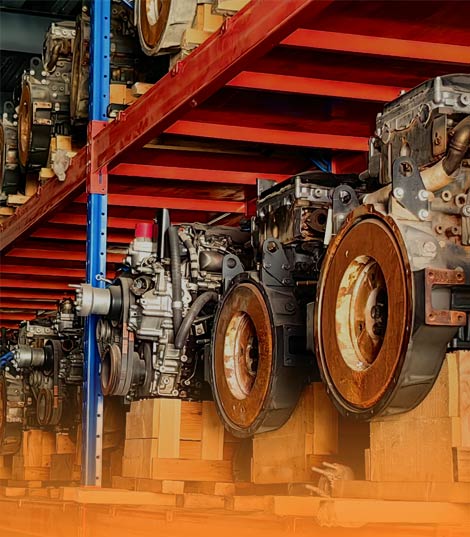
Hydraulic Main Pump: A Field Guide to the Component That Pumps Life Into Every Cylinder
Among hydraulic components, one single part carries more economic weight per unit than any other on a modern machine: the main hydraulic pump. The system’s entire force begins here. The pump draws low-pressure oil from the tank and delivers it at the high pressure and flow the cylinders, motors and valves demand, and when it weakens, every function of the machine slows, heats and eventually stops. Close to seventy percent of excavator failures trace back to the hydraulic system, and at the centre of that system is the pump, the most expensive single hydraulic component on the machine and one of the most frequently searched replacement parts of 2026. This article is a field guide to that one component: how it works, why it fails, how to read the early signals, and how to buy and fit a replacement that restores the machine instead of repeating the fault.
The demand pattern behind the search is structural. The installed base of high-hour machines is larger than ever, hydraulic pressures keep rising as electro-hydraulic control spreads, and replacement decisions in 2026 increasingly favour complete new pumps over rebuilds, because labour cost, core-exchange logistics and the risk of repeat failure make the price gap narrower than it appears. A pump search is almost always one of urgency: the machine is slow, hot or both, and the buyer needs a unit that matches the machine’s pump family exactly, because a single model can carry several different pump configurations across build years. Fleets that understand the pump as the heart of the system, not as a bolt-on accessory, buy better and fail less.
What the Main Pump Actually Does
The main pump is almost always a variable-displacement axial-piston unit: a rotating group of pistons riding a swashplate that draws oil from the tank and pushes it out under pressure, with the swashplate angle setting how much flow the pump makes at any instant. A pressure-compensator and a flow-control loop trim the output so the pump delivers what the job needs without overloading the engine, and a charge pump keeps the inlet fed so the main group never runs dry. The result is a component that makes high pressure and high flow on demand, silently, for thousands of hours, with clearances measured in microns. The pump is the only component that sees tank oil on one side and system pressure on the other at full flow, and its rotating group is the precision surface the rest of the hydraulic system depends on. When the pump’s flow or pressure falls, every cylinder moves slower and every motor turns weaker, which is why the pump’s health is the machine’s health.
Why Pumps Fail: Contamination, Aeration, Heat and Load
Pump failures trace to a short list, and contamination leads it. Abrasive particles that pass a tired suction or return filter embed in the piston shoes, the swashplate and the valve plate, and a pump with scored surfaces loses its ability to hold pressure and flow. Aeration is the second killer: air drawn in at a loose suction fitting or a low tank cavitates the rotating group, and cavitation pits metal and erodes seals faster than almost anything else. Heat is the third: oil above its design temperature thins, loses film strength and cooks the pump’s internal seals, and a pump that runs hot is a pump that is already dying. Load beyond design, from a relief valve stuck closed or a cylinder that has seized, loads the rotating group past its rating and snaps or scores it. Wear is the structural one: every hour flexes and slides the internal surfaces, and a high-hour pump gradually loses efficiency until it can no longer hold pressure under load. The common thread is that the pump forgives nothing upstream: a poor filter, a loose suction line, a blocked breather or a weak cooler all land on the rotating group.
Reading the Failure Signals Early
A failing pump gives warnings before it fails completely, and reading them early is the difference between a planned replacement and a stranded machine. The first signal is slow operation: a machine that no longer lifts, swings or travels at the speed it used to, especially when two functions are worked together, is a pump losing flow. The second is heat: a hydraulic system that runs hotter than it used to, or a pump body that is too hot to touch, is a pump working harder to make the same flow and losing the difference to internal leakage. The third is noise: a rising whine or a rhythmic knocking from the pump, or a suction-side growl that means air is being drawn in. The fourth is pressure: a system that cannot reach or hold its rated pressure under load, confirmed with a gauge at the pump outlet. The fifth is the visual check: fine metal in the return filter or a milky, aerated tank, both of which point at the pump’s rotating group. Catching slow operation at the early stage allows an orderly replacement; catching it after the pump has sent its debris through the valves and cylinders turns it into a system-wide rebuild.
Specifications: Family, Displacement, Control and Rotation
Buying a main pump well means matching the unit to the machine’s pump family, not just to the model. The pump family and its displacement decide the flow curve, and the control type – pressure-compensated, load-sensing or electro-proportional – decides how the pump talks to the rest of the system, so a unit with the wrong control leaves the machine sluggish or unstable even if it bolts on. The rotation direction and the shaft type must match the engine drive, and the port sizes and positions decide whether the hoses reach. The same machine can carry different pump families across build years and even across production runs, so the part number cast on the housing is the first reference and the only reliable one. In 2026 professional buyers demand that pump number and its control specification in writing before ordering, because the wrong pump is not a slight mismatch but a different machine characteristic entirely, and in the worst case a parts-order mistake that only shows up as slow, hot operation under load.
New, Remanufactured or Cheap: Reading the Real Differences
The main-pump market has three tiers, and the differences are bigger than the prices suggest. A new unit, built to the original rotating-group and control specification and bench-tested to pressure, carries the highest cost and the lowest risk, and for a machine-down emergency it is the fastest safe path. A quality remanufactured unit, fully stripped, rotating-group replaced or reconditioned, control calibrated and bench-tested, delivers most of the new-unit reliability at a mid-tier price, and a serious reman house supplies test reports. The bargain tier, cleaned and resealed original bodies with unknown internal history, is where repeat failures live: a swashplate scored by old contamination will never recover its flow, and a rotating group that has been run dry carries fatigue a clean exterior hides. The differentiator is not the label but the paperwork: bench-test pressure and flow figures, control calibration confirmation and a warranty measured in running hours. On a component this central, the cheapest tier is the most expensive one.
Installation Discipline: Fill, Bleed, Align and Clean
Most replacement pumps that fail early are killed in the first minutes of their lives, and the causes are all preventable. Prime the pump before start: fill the case and the inlet with clean oil so the rotating group is never run dry, because a dry pump at first start wipes its surfaces in seconds. Replace or rigorously clean the suction line and the inlet strainer, since the contamination and debris in the old line is what will kill the new unit; the supply line is cheap insurance and should never be reused blind. Replace the tank-return and suction filters at the same time as the pump, and find and fix the reason the old pump failed, whether that is a blocked cooler, a collapsed suction hose, an air leak or an overloaded relief, because a new pump on a sick circuit inherits the old pump’s death sentence. Align the drive coupling so the pump shaft is not side-loaded, torque the port fittings to spec without distorting the housing, and bleed the system of air before any load so the rotating group establishes its oil film. Fleets that follow this discipline get full life from replacements; those that skip the priming step buy the same pump twice.
Hot Climates, Dust and the Duty Curve
Pump life is a climate and duty story as much as an hours story. Hot ambient conditions raise the baseline of every temperature the oil sees, thin the film and push the pump toward the limits that score its surfaces, so fleets in hot regions should watch oil cooling and never ignore rising system temperature. Dusty sites make the tank breather and every suction joint a critical seal: a single air leak after the filter lets cavitation straight into the rotating group, which erodes it from the inside. High-load, low-speed duty, such as sustained digging in hard or abrasive ground, keeps system pressure high and flow marginal at exactly the wrong moment. Cool-down idling before shutdown, even a minute after hard work, measurably extends seal life by letting the oil film settle. The service-hour meter matters less than the oil temperature, the suction cleanliness and the duty, and the fleets that respect those three factors replace pumps on schedule instead of on the roadside. Holding a buffer pump for the highest-hour machines is the single inventory decision that most shortens unplanned hydraulic downtime.
Storage and Handling Before Fitment
A pump on the shelf is precision equipment, not a casting. Store units in their original box, sealed with the ports plugged, because a grain of dust that enters the case will find the rotating group. Keep them dry and away from vibration sources that can settle the shaft and score the surfaces. Never lift a pump by the shafts or use the ports as grips, since a bent shaft or a side-loaded bearing is a failure from the first start. Before fitting, rotate the shaft by hand and confirm it turns freely with no rub, check the ports for damage and the case for cracks, and leave the plugs in until the last moment so nothing enters the oil path. A pump damaged in storage fails identically to a defective one, and both cost a second machine-down day.
The Mistakes That Cost the Most
The recurring errors are predictable. Replacing the pump without finding why the old one failed, and handing the new unit the same early death. Reusing a contaminated suction line or a clogged filter. Skipping the priming step and wiping the rotating group in the first thirty seconds. Ignoring slow operation and rising heat for months until the pump sends debris through the valves and cylinders. Buying an unverified bargain unit with a worn swashplate and no bench-test report. Ordering by machine model instead of by the housing’s cast number and getting a mismatched control type. Letting a suction air leak or a blocked cooler starve and cavitate the new unit. Each turns a planned replacement into a repeat failure or a system-wide rebuild. The discipline that avoids them is simple: match the cast number and control specification, fix the root cause before fitting, clean or replace the suction path, prime before start, and treat every slow-operation and heat signal as a scheduled pump window rather than background noise.
Conclusion
The hydraulic main pump is the highest-value single hydraulic component in the 2026 aftermarket because it is the heart that pumps life into every cylinder and motor, and it is the component least able to forgive dirty oil, aerated suction or careless installation. A variable-displacement axial-piston unit holding tank oil against system pressure with micron clearances, vulnerable above all to contamination, aeration and heat, it deserves to be treated as a matched specification item with disciplined installation, not a bolt-on swap. Fleets that match the cast number and control type, fix the root cause before fitting, prime every new unit and read the early slow-operation and heat signals spend less per hour and avoid the scored rotating groups, debris-filled valves and machine-down days that follow a cavitated pump. Racer Machinery supplies brand-new hydraulic main pumps matched to your machine’s pump family and control specification, with bench-test figures confirmed in writing before shipment and consolidated mixed orders shipped to more than one hundred countries, so your next pump programme is scheduled by you and not by a pump that has gone quiet.