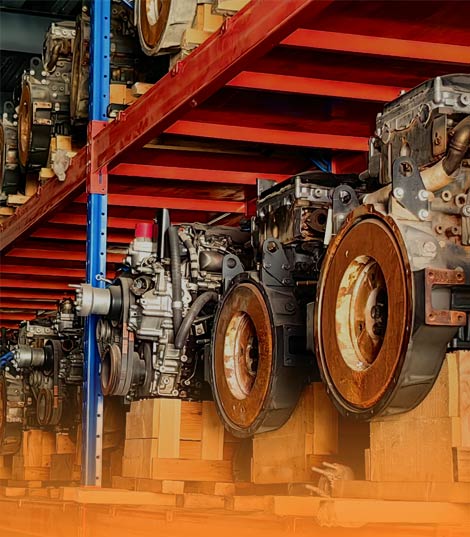
Starter Motor: A Field Guide to the Electrical Rotating Machine That Starts Everything
When buyers search for a single electrical part in 2026, one rotating machine appears again and again, above the alternator, the relay and the battery: the starter motor. The reason is a blend of exposure and season. The starter is the component that turns the engine from a standstill into running, and it does this under the harshest electrical and mechanical moment an engine ever asks of itself – a high-current draw against a cold, stiff engine, on a cold morning, with a battery that is itself at its weakest. A weak starter does not degrade politely; it fails as a no-crank, a slow-crank or a click, and a machine that will not start is a machine that earns nothing that day. This article is a field guide to that one component: how it works, why it fails, how to read the early signals, and how to buy and fit a replacement that restores reliable starting instead of repeating the fault.
The demand curve behind the search has a clear seasonal pulse and a structural base. Starter searches surge in winter months in cold climates, when marginal batteries, thickened oil and tired solenoid contacts all fail on the same morning, and alternator and charging-component searches track fleet hours year-round because charging systems work continuously and their bearings, brushes and regulators wear on a schedule of their own. The 2026 pattern shows buyers increasingly searching for the complete electrical chain – cables, ground straps, relays and solenoids alongside the rotating units – because the lesson that keeps repeating is that a starter replaced against a corroded ground path, or an alternator replaced against a failing regulator, both come back as warranty claims. A starter search is a recognition that the rotating machine is only as good as the circuit around it. Fleets that treat starting as a system, not a single box, buy better and fail less.
What a Starter Motor Actually Does
The starter is a high-torque direct-current electric motor with a small gear, called a pinion, that engages the engine’s ring gear and spins it fast enough for the engine to fire. When the key or the start command is given, current flows through a solenoid that pushes the pinion into the ring gear and closes the main contacts that feed the motor its full current, and the motor turns the engine through several compression cycles until it runs on its own. A set of brushes and a commutator carry the high current to the spinning armature, and a one-way clutch lets the pinion spin the engine up but releases the moment the engine outruns the starter so the motor is not driven backward at engine speed. What matters for reliability is that the starter is a brief, violent load: it draws hundreds of amperes for a few seconds, every start, against a cold engine, and every component in that path – the battery, the cables, the solenoid, the brushes – must be healthy for the start to succeed. The starter is the first electrical act of every working day, and the engine depends on it absolutely.
Why Starter Motors Fail: Brushes, Solenoids, Bearings and Heat
Starter failures trace to a short and familiar list, and the brushes lead it. The brushes ride the commutator and carry the full start current, and after tens of thousands of starts they wear short, and a short brush loses contact and the motor spins weakly or not at all. The solenoid is the second cause: its contacts pit and its plunger sticks, so the starter clicks without cranking, or engages the pinion without feeding the motor, and a failed solenoid is the classic no-crank-with-a-click. Bearings and bushings are the third: the armature shaft rides in them, and a worn bushing lets the armature drag against the field, drawing high current and overheating. Heat is the fourth: starters run hot during long or repeated cranking in cold weather, and the insulation and the grease age faster, so the very engines that need the most cranking kill their starters soonest. Electrical faults are the fifth: a corroded ground, a weak cable or a poor terminal drops the voltage the motor needs, and a starter that is healthy but under-fed behaves exactly like a dying one. The common thread is that the starter is the finial of the starting circuit, and every weakness around it – a tired battery, a corroded ground, a long cable – lands on the solenoid and the brushes.
Reading the Failure Signals Early
A failing starter gives warnings before it fails completely, and reading them early is the difference between a planned replacement and a machine that will not start on site. The first signal is the slow crank: an engine that turns over more slowly than it used to, especially when cold, is a starter losing brush or a circuit losing voltage. The second is the click-without-crank, where the solenoid engages but the motor does not spin, the clearest sign of a failed solenoid contact. The third is intermittent starting: a machine that starts on the third try but not the first, or that needs a tap on the starter, is a brush or a commutator reaching the end of its contact. The fourth is heat and smell: a starter that is too hot to touch after one start, or that smells of burnt insulation, is a motor dragging or a circuit under-fed. The fifth is the voltage check: a battery that is healthy but a cranking voltage that collapses at the starter points at a cable, a ground or a solenoid, not the battery. Catching the slow crank at the early stage allows an orderly replacement; catching it after the solenoid has welded shut or the armature has seized turns it into a machine-down, tow-in day.
Specifications: Power, Teeth, Rotation and Mounting
Buying a starter well means matching the unit to the engine’s starting requirement, not just to the model. The power rating and the gear reduction type decide how much cranking torque the motor makes, and a replacement that is under-rated stalls against a cold engine or an oversized one, while one that is over-rated can draw more current than the cables safely carry. The pinion tooth count and the rotation direction must match the ring gear, because a pinion of the wrong teeth or the wrong rotation will not mesh or will mesh and shatter. The mounting flange and the bolt pattern decide whether the starter seats on the engine, and the terminal type decides whether the cables reach and clamp. The same engine can carry different starter families across build years, so the part number stamped on the housing is the first reference and the only reliable one. In 2026 professional buyers demand that starter number and its power specification in writing before ordering, because the wrong starter is not a slight mismatch but a no-crank or a broken ring gear, and in the worst instance a parts-order mistake that only shows up as a dead machine on site.
New, Rebuilt or Cheap: Reading the Real Differences
The starter market has three tiers, and the differences are bigger than the prices suggest. A new unit, built to the original brush, solenoid and gear specification and bench-tested for draw and spin, carries the highest cost and the lowest risk, and for a machine-down emergency it is the fastest safe path. A quality rebuilt unit, fully stripped, brushes and solenoid replaced and armature tested, delivers most of the new-unit reliability at a mid-tier price, and a serious rebuilder supplies draw and spin test reports. The bargain tier, cleaned and resealed original bodies with unknown brush history and untested solenoid contacts, is where repeat failures live: a brush that has worn to its limit will not recover, and a solenoid with pitted contacts will click and not crank. The differentiator is not the label but the paperwork: a no-load spin test, a current-draw figure and a warranty measured in starts or running hours. On a component this load-sensitive, the cheapest tier is the most expensive one.
Installation Discipline: Cables, Ground, Alignment and Torque
Most replacement starters that fail early are killed in the first weeks of their lives, and the causes are all preventable. Clean and tighten every cable and ground connection before fitment, because a corroded ground or a loose terminal drops the voltage the new starter needs and makes a healthy unit crank weakly. Replace the battery-to-starter cable if it is heat-damaged or corroded, since the cable is the path the hundreds of amperes travel and a weak cable dooms the new motor. Align the starter squarely with the ring-gear housing so the pinion meshes without grinding, because a cocked starter chips teeth on both the pinion and the ring gear. Torque the mounting bolts to specification, because a loose starter rattles and a misaligned one drags. Verify the solenoid terminal polarity and the trigger wire before the engine is closed up, and confirm the engine cranks fully and promptly on the first try. Where the machine has a known weak circuit, fit a relay or a heavier ground strap at the same time, because a new starter on a sick circuit inherits the old starter’s failure. Fleets that follow this discipline get full life from replacements; those that ignore the cable and the ground buy the same starter twice.
Cold Climates, Heat and the Duty Curve
Starter life is a climate and duty story as much as a starts story. Cold ambient conditions thicken the oil, weaken the battery and load the starter at exactly the moment it is least able to cope, so fleets in cold regions should keep batteries strong and starters fresh, and treat a slow cold-crank as a scheduled replacement before winter. Hot-climate duty does not spare the starter either: long cranking to start a hot, vapour-locked or tired engine cooks the motor and its insulation, so a machine that needs extended cranking should be diagnosed, not cranking-cycled. High-start-frequency duty, such as a machine stopped and started repeatedly through a shift, loads the brushes and the solenoid far beyond occasional use and shortens life proportionally, so buffer stock on high-cycle machines is essential. The service-hour meter matters less than the number of starts, the battery health and the ground condition, and a stock plan that ignores those three factors plans its own no-crank mornings. Holding a buffer starter and a fresh battery for the working machines removes more unplanned downtime than almost any other single electrical inventory decision, because a machine that will not start cannot work at all.
Storage and Handling Before Fitment
A starter on the shelf is an electrical machine, not a casting. Store units in their original box, dry and away from temperature swings that age the insulation and the grease, because a damp or heat-cycled starter arrives with shortened life. Keep the terminals protected and never rest a starter on its pinion, since a bent pinion or a damaged gear is a no-mesh from the first start. Before fitting, spin the pinion by hand and confirm it moves freely and returns on its clutch, check the terminals for corrosion and the housing for cracks, and leave the terminal caps on until the last moment so nothing enters the motor. A starter damaged in storage fails identically to a defective one, and both cost a second no-crank day.
The Mistakes That Cost the Most
The recurring errors are predictable. Replacing a starter without checking the battery, the cable and the ground, and handing the new unit the same voltage drop that killed the old one. Reusing a corroded or heat-damaged battery cable because it still connects. Fitting new parts and then cranking a sick engine for extended periods that cook the motor. Skipping the pinion alignment so the starter chips the ring gear. Buying an unverified bargain unit with worn brushes and untested solenoid contacts and no draw test. Ordering by engine model instead of by the stamped starter number and getting a wrong tooth count or rotation. Ignoring a slow cold-crank for weeks until the solenoid welds shut and the machine dies on site. Each turns a planned replacement into a repeat failure or a broken ring gear. The discipline that avoids them is simple: match the stamped number and power, refresh the battery, cable and ground around it, align the pinion, and treat every slow-crank and click as a scheduled starter window rather than a bad morning.
Conclusion
The starter motor is the most seasonally-surged single electrical part in the 2026 aftermarket because it is the rotating machine that starts every working day, and it is the component least able to forgive a weak battery, a corroded ground or careless installation. A high-current direct-current motor engaging a ring gear under cold, stiff-engine load, vulnerable above all to brush wear, solenoid failure and circuit voltage drop, it deserves to be treated as a system component with disciplined installation, not a bolt-in box. Fleets that match the stamped number and power, refresh the battery and the cable and ground around the starter, align the pinion and read the early slow-crank and click signals spend less per hour and avoid the welded solenoids, chipped ring gears and no-crank mornings that strand machines on site. Racer Machinery supplies brand-new starter motors matched to your engine’s starter number and power specification, with no-load and current-draw checks confirmed before shipment and consolidated mixed orders shipped to more than one hundred countries, so your next starting programme is scheduled by you and not by a starter that will not turn.