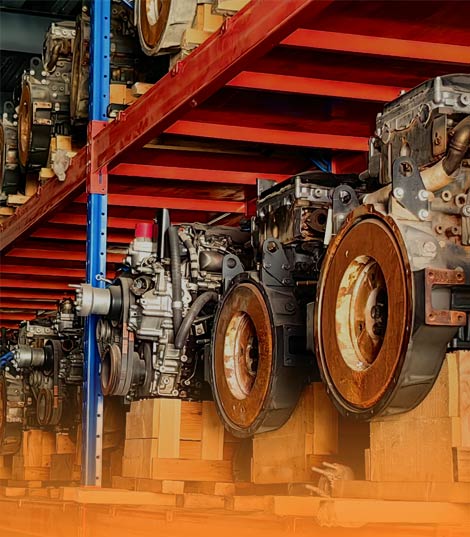
No system defines an excavator more completely than its hydraulics. The engine provides the power, but the hydraulic system turns that power into the precise, brutal work of digging, lifting and swinging. In 2026, the hydraulic parts market sits at a convergence of three forces: an aging installed base of machines entering their high-wear years, a technology transition toward electro-hydraulic and digital control, and a supply chain that has become more international than ever. For parts buyers, understanding these forces is the difference between buying components that last and gambling on components that fail at the worst possible moment.
The Hydraulic Market in 2026: Size and Structure
Market research firms put the global hydraulics market at approximately USD 60.1 billion in 2026, with forecasts reaching USD 74.4 billion by 2031 at a compound annual growth rate of 4.4 percent, and Asia Pacific as both the largest and fastest-growing region. The hydraulic equipment segment is estimated at USD 44.3 billion in 2026, growing to USD 56.6 billion by 2031 at 5.1 percent CAGR. Within construction specifically, the market for hydraulic components used in construction machines was valued at about USD 19.2 billion in 2025 and is projected to reach USD 32 billion by 2034, a CAGR of 5.8 percent.
Hydraulic pumps are the single largest component category, representing 28.5 percent of the construction hydraulic components market, with Asia Pacific contributing 42.3 percent of revenue. The electrohydraulic actuator segment, the fastest-growing technology area, was worth roughly USD 2.65 billion in 2025 and is forecast to reach USD 4.86 billion by 2034 at 6.8 percent CAGR. These numbers describe a market that is large, growing and shifting technology simultaneously.
Why Hydraulic Parts Demand Is at a Cyclical High
The Aging Fleet Effect
The single strongest driver of hydraulic parts demand in 2026 is fleet age. Excavators sold between 2015 and 2021, the previous global boom, are now deep into their operating lives. A main hydraulic pump typically requires attention between 5,000 and 8,000 operating hours depending on duty cycle and maintenance discipline. Swing motors, travel motors, control valves and cylinders follow similar curves. The global fleet that crossed 5,000 hours in 2024-2025 is now demanding pumps, seals, valve kits and complete cylinder rebuilds in record numbers.
Contamination as the Hidden Enemy
Most hydraulic component failures trace back to contamination. Abrasive particles entering through seals, breathers or contaminated fluid score pump pistons, wear valve spools and destroy bearing surfaces. The operating conditions of 2026, dusty mining sites, high-cycle urban work and stretched maintenance intervals in emerging markets, are ideal conditions for contamination-driven failure. This is why hydraulic filtration demand is growing faster than the machine population: each excavator now carries a main return filter, pilot filter, suction strainer and multiple inline filters, and every one of them is a scheduled consumable.
The Cost of Downtime
Hydraulic failure is not just an expensive repair; it is expensive downtime. A mid-size excavator earns its keep only while digging, and an unplanned pump failure can idle a machine for days while parts and labor are sourced. The economics of 2026 favor preventive replacement: replacing a pump on schedule is a fraction of the cost of replacing it after catastrophic failure, when debris from the failed pump can destroy the entire circuit, valves, motors and cylinders included.
The Technology Shift: Electro-Hydraulics and Digital Control
Electro-Hydraulic Actuators and Pumps
Research published in 2025 found that electrohydraulic actuators can reduce energy consumption by up to 54 percent compared with conventional hydraulic systems, a finding that is driving investment in advanced hydraulic architectures. At CONEXPO 2026, the industry’s premier North American trade show, the clear themes were electro-hydraulic systems, digital hydraulics, smart valves, variable-displacement pumps, sensor-integrated actuators, IoT-connected hydraulic systems and predictive maintenance.
For machine owners, the practical effect is a generation of excavators whose hydraulics are controlled electronically, with the operator’s joystick inputs translated into electrical signals that command proportional valves and variable pumps. These machines are more efficient and more precise than their hydraulic-pilot predecessors, but they introduce new failure modes and new parts: solenoids, proportional valves, electronic controllers, pressure sensors and wiring.
What Electrification Means for the Parts Mix
Electrification changes which hydraulic parts fail and how they are replaced. In a conventional excavator, the main pump is mechanically driven by the engine and controlled by hydraulic pilot signals. In an electric or hybrid excavator, the pump may be driven by an electric motor and controlled by software, with the electric motor itself becoming a wear component. The parts ecosystem is expanding: batteries, inverters and electric motors join pumps and valves as components that wear, fail and need replacement. For aftermarket suppliers, this means building catalog coverage that spans both conventional and electro-hydraulic systems, because both will work side by side for the next decade.
The Parts That Matter Most in 2026
Main Hydraulic Pumps
The main pump, usually a variable-displacement axial piston pump, is the heart of the excavator’s hydraulic system and the most expensive single hydraulic component on the machine. Replacement decisions in 2026 increasingly favor complete new pumps over rebuilds, because labor costs, core exchange logistics and the risk of repeat failure make the price gap narrower than it appears. When sourcing a main pump, buyers should verify the exact pump family, displacement and control type, since a single machine model can use several different pump configurations across build years.
Swing and Travel Motors
Swing motors and travel motors are high-load components that fail through seal wear, bearing wear and brake wear. A failing swing motor shows up as sluggish or uneven rotation; a failing travel motor as weak or erratic travel. Both are replaceable as complete assemblies or repairable with seal kits and brake components, and both are among the most frequently searched excavator parts on aftermarket platforms.
Control Valves and Spool Kits
The main control valve distributes oil to every actuator, and its spools and seals wear with use. Valve seal kits, spool assemblies and complete replacement valves are steady-demand items, particularly for machines working in contaminated conditions. The shift to electro-hydraulic control has made the valve assembly more complex, and compatibility verification against the machine’s control system is essential.
Cylinders and Seal Kits
Boom, arm and bucket cylinders are exposed to the harshest forces on the machine, and their seals and chrome rods wear continuously. Cylinder seal kits are among the highest-turnover hydraulic parts, and complete cylinder replacement is common when rods are scored or barrels are damaged. In 2026, buyers increasingly order seal kits ahead of need, since seal failure is predictable and repair is fast when parts are on hand.
Hydraulic Filters and Filtration
Hydraulic filters protect every component downstream. Return filters, pilot filters and suction strainers are all scheduled consumables, and their demand grows with fleet age and operating severity. Premium filtration is the cheapest insurance an owner can buy: a filter that costs tens of dollars can protect a pump that costs thousands. The 2026 trend is toward higher-efficiency media and more frequent change intervals in severe duty.
Hoses, Fittings and Connectors
Hydraulic hoses fail from pressure cycling, abrasion and age, and their replacement is one of the most common maintenance jobs on any excavator. The trend toward higher system pressures and electro-hydraulic control has made hose quality and fitting compatibility more important than ever, since a failed hose at high pressure is both an operational and a safety event.
Sourcing Hydraulic Parts in 2026: Compatibility Is Everything
Hydraulic components are unforgiving of approximation. A pump from a different displacement family, a valve with different spool characteristics or a seal kit for the wrong cylinder revision will not perform correctly, and in the worst case will damage the machine. The sourcing discipline for 2026 rests on five pillars:
Verify by Serial Number, Not Just Model
Excavator manufacturers change hydraulic component sourcing between build years and even between production runs within the same model year. The machine’s serial number, together with the part number stamped on the existing component, is the only reliable basis for compatibility. Reputable suppliers maintain cross-reference databases that connect machine serial ranges to the correct pump, motor, valve and seal part numbers.
Specify the Component Family
For pumps and motors, the component family matters as much as the machine model. The same excavator model may use pumps from different families depending on market and build year. Buyers should record the pump’s manufacturer, model and displacement from the nameplate before ordering, and suppliers should ask for this information rather than guessing.
Prefer Complete Assemblies for Major Components
For main pumps, swing motors and travel motors, complete replacement assemblies reduce risk. Rebuilds depend on the quality of the core and the skill of the rebuilder, and in a 2026 market where labor is scarce and machine downtime expensive, the reliability premium of a new assembly is usually worth the difference.
Stock Consumables Strategically
Seal kits, filters and hoses fail predictably and are cheap to stock. A small inventory of the most common seal kits and filters for the machines in a fleet turns emergency repairs into scheduled maintenance and keeps machines productive.
Demand Technical Support
Hydraulic replacement is technical work, and a supplier who can confirm compatibility, explain installation considerations and support troubleshooting is worth more than a marginally lower price. The best suppliers back their parts with genuine knowledge of the machines they serve.
The Outlook: Hydraulics Through the Decade
The hydraulic parts market is on a clear growth path through 2034, driven by fleet age, infrastructure investment and the technology transition to electro-hydraulic systems. The conventional hydraulic components that dominate the installed base, pumps, motors, valves, cylinders, seals and filters, will remain the core of aftermarket demand for years, because machines are replaced slowly and the fleet is young in the emerging markets where the fastest growth is occurring.
At the same time, the parts mix is evolving. Electric machines, IoT-connected hydraulics and predictive maintenance will change when and how components are replaced, shifting demand from emergency repair toward planned exchange and expanding the catalog into batteries, inverters and electric drive components. Buyers who work with suppliers that cover both the conventional and the electric spectrum will be best positioned as the decade progresses.
Common Hydraulic Failure Patterns and How to Diagnose Them
Understanding the failure patterns of hydraulic components saves money, because most failures announce themselves before they become catastrophic. The most common pattern is gradual performance loss: the machine becomes slower, weaker or less precise over weeks or months. The second is contamination-driven failure: a burst filter, a failed seal or contaminated oil introduces particles that score pumps and valves in hours. The third is thermal failure: prolonged high oil temperature degrades seals and accelerates wear across the entire system. Each pattern has distinct symptoms that a good operator or technician can recognize.
Slow or Weak Operation
When an excavator digs slower than it used to, the first suspects are the main pump, the pilot system and the engine under load. A worn pump loses volumetric efficiency, showing up as slow boom or arm movement and longer cycle times. A failing pilot system shows up as sluggish control response. Buyers and technicians should measure cycle times, check pump flow at the test port and compare against specification before ordering parts, because replacing the wrong component is expensive and demoralizing.
Contamination Detection
Oil analysis is the cheapest insurance in the hydraulic aftermarket. A simple oil sample reveals particle counts, water content and metal wear debris, and the pattern of metals identifies the failing component: iron from pumps and motors, copper from bushings and bearings, aluminum from certain pump families. In 2026, more owners are adding oil analysis to their scheduled maintenance, and parts suppliers increasingly support the diagnosis by helping buyers match symptoms to the correct component families.
Overheating and Its Causes
Hydraulic oil temperature above specification is a leading cause of seal and pump failure. Common causes include a failed cooler, a worn pump generating excess heat, restricted return lines or operation beyond the machine’s intended duty. Diagnosing the cause before replacing the symptom, replacing the cooler when the real problem is pump wear, is a classic aftermarket failure that a competent supplier can help buyers avoid.
Rebuild versus Replace: The 2026 Decision Framework
Every hydraulic buyer eventually faces the rebuild-versus-replace decision, and 2026 market conditions have shifted the balance. Rebuilding a main pump or swing motor is less expensive than replacement when the core is sound, the rebuild is done by a competent shop and the machine is not in a revenue-critical position. Replacement is favored when the core is badly worn, when labor and core exchange logistics make the rebuild cost approach the replacement price, or when the machine’s downtime cost is high. The framework that experienced buyers apply has four factors: the condition of the core, the quality and warranty of the rebuild, the downtime cost of the machine and the availability of a replacement unit.
Suppliers who offer both options, and who are honest about which one fits the buyer’s situation, build durable relationships. The best suppliers stock complete replacement assemblies for common machine families, maintain relationships with qualified rebuild shops and help buyers think through the total cost, not just the first invoice.
Filtration as a Strategic Category
Hydraulic filtration deserves more strategic attention than it typically receives. The filter is the only component that protects every other component in the system, and its cost is negligible relative to the damage it prevents. The 2026 trends in filtration are higher-efficiency media, better burst strength and more rigorous specification matching. Buyers should verify that a replacement filter matches the original specification for micron rating, flow capacity and bypass valve setting, since a filter with the wrong micron rating either passes damaging particles or restricts flow and causes cavitation.
The strategic move for fleet owners is to standardize filtration across machines where possible, build a small buffer stock of the most common filters and schedule changes by hours rather than by failure. Suppliers who carry the full filter families for popular machine brands, engine, hydraulic, transmission and fuel filters in one catalog, make this standardization easy, and the consolidation reduces both cost and administrative burden.
Digital Diagnostics and the Connected Hydraulic System
The connected excavator is changing hydraulic service. Machines with telematics report system pressures, oil temperatures, filter differential pressure and fault codes in real time, which allows failures to be predicted and planned rather than discovered. Predictive maintenance, the practice of replacing components before failure based on data trends, is moving from the mining sector into mainstream construction fleets, and hydraulic components are among the first beneficiaries because their failure signatures are measurable and predictable.
For parts suppliers, the connected machine is an opportunity to serve planned maintenance rather than emergency repair. A supplier who can interpret diagnostic data, help a buyer identify the failing component from fault codes and deliver the right parts before the machine breaks down becomes an essential partner rather than a vendor of last resort. As telematics penetration grows, the aftermarket is reorganizing around this model, and buyers should look for suppliers who speak the diagnostic language.
Seal Kits and Soft Parts: The Underestimated Category
Seal kits and soft parts, the O-rings, wiper seals, rod seals, pistons seals and gaskets that keep hydraulic circuits tight, are the most underestimated category in the hydraulic aftermarket. Their unit price is low, but their impact is disproportionate: a leaking cylinder seal costs fluid, causes contamination and degrades performance, and a failed seal on a main cylinder can take a machine out of service. Seal kits are also where specification discipline matters most, since a kit must match the exact cylinder revision, rod diameter and seal profile of the installed unit.
Why Seal Kits Fail and How to Avoid Repeat Failures
Seal failures trace to three causes: normal wear over operating hours, contamination scoring the sealing surfaces, and incorrect installation. Repeat failures are almost always a diagnosis problem, replacing the seal without addressing the contamination or the rod condition that caused the first failure. The discipline that prevents repeat failures is simple: inspect the rod and bore surfaces before installing a new kit, address any contamination source and use the correct kit for the cylinder revision. Buyers who carry the common seal kits for their machines, and who source them from suppliers with accurate cross-references, convert seal failures from emergencies into routine maintenance.
Hydraulic Oil: The Lifeblood That Is Often Overlooked
No discussion of hydraulic parts is complete without the fluid itself. Hydraulic oil is a working component: it transmits power, lubricates moving parts and carries heat and contamination away from the system. Its condition determines the life of every component it touches, and its cost is trivial compared with the pumps and motors it protects. The 2026 trends in hydraulic fluids are higher-viscosity-index oils for extreme climates, better anti-wear and anti-foaming packages, and a growing acceptance of premium fluids in machines that were historically run on economy grades.
Oil analysis is the tool that connects fluid management to component life. A scheduled oil analysis program catches contamination before it destroys components, identifies wear trends in pumps and motors and extends the interval between unnecessary rebuilds. In the parts-buying context, oil analysis results tell a buyer which components to stock, which machines need attention and whether a reported failure is systemic or isolated. Suppliers who understand oil analysis and help buyers interpret results provide value that goes far beyond selling parts.
Racer Machinery is a professional supplier of genuine-spec excavator spare parts covering engine, hydraulic, undercarriage, electrical and work equipment components for major machine brands including Caterpillar, Komatsu, Hitachi, Cummins, Volvo and Hyundai. Our hydraulic parts range includes main pumps, swing and travel motors, control valves, cylinders, seal kits and filtration for a wide range of excavator models. With competitive pricing and worldwide shipping, Racer Machinery supports excavator owners, workshops and dealers in keeping their fleets working. Contact our team with your part numbers for a fast quotation and reliable delivery.