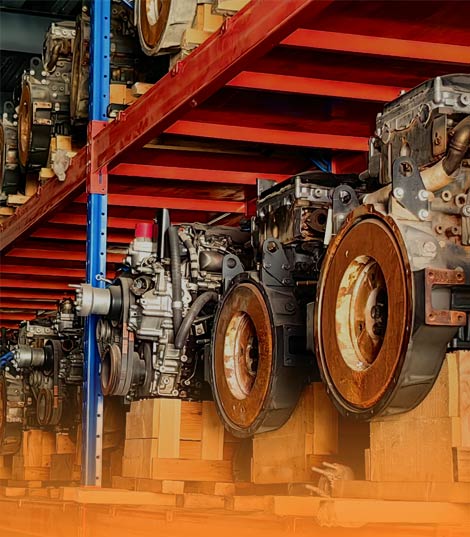
A camshaft is the rotating shaft inside a diesel engine that opens and closes each intake and exhaust valve at exactly the right moment, and catalog reference 1125112552 is one commonly quoted number for a replacement camshaft fitted to the engine of a 20-ton-class hydraulic excavator. The camshaft carries a series of precisely shaped lobes, one or more for every valve in the cylinder head, and as it turns at half crankshaft speed each lobe lifts a follower, which pushes a valve open against its spring and then lets it close. That timing is what lets a cylinder take in fresh air, compress it, burn the fuel and expel the exhaust in the correct order, thousands of times a minute, for the whole service life of the machine. If you are reading this because the engine has lost power, because the valve train is noisy, because a valve is not seating, because the engine will not start after a timing job, or because an overhaul is planned and the camshaft should be renewed with the followers, the short answer is: confirm the exact camshaft reference against your engine serial range, inspect the lobe profiles and bearing journals before ordering, and fit a shaft with the correct lobe lift, timing orientation and journal size so the valve train returns to specification. This guide explains what a camshaft does, how a reference such as 1125112552 fixes the fitment, how a worn camshaft announces itself, how to measure and choose a replacement, and how to install and bed it in so the rebuild lasts. The number is used only as a representative catalog reference for this class of part; no equipment or component brand is named.
What a Camshaft Does in a Diesel Engine
The camshaft is the mechanical memory of the engine. It does not create force; it decides when the force is applied. A gear or chain driven from the crankshaft turns the camshaft at half the crankshaft speed, because a four-stroke cylinder needs two crankshaft revolutions to complete its intake, compression, power and exhaust sequence, and during those two revolutions each valve opens exactly once. Mounted along the shaft are cam lobes: hardened, egg-shaped profiles that rotate under a follower. As the high point of a lobe passes the follower, it lifts the follower and opens the valve; as the lobe rotates away, the valve spring closes the valve again. The shape of the lobe determines how far the valve opens, how long it stays open and how quickly it moves, and those three properties control how well the cylinder breathes at every speed.
On an overhead-valve layout the camshaft may sit in the cylinder block and actuate the valves through tappets, pushrods and rocker arms; on an overhead-cam layout it sits in the head and acts directly on buckets or finger followers. Both arrangements do the same job, and both depend on the same discipline: the lobe must have the correct profile, the journal must run in a clean oil film, and the shaft must be timed precisely to the crankshaft. A camshaft that is a fraction of a millimetre out of angular alignment changes when the valves open relative to the pistons, which can cost power, cause backfiring or, in an interference engine, allow a valve to strike a piston.
The Valve Timing Sequence
Each cylinder needs four distinct events. The intake valve opens slightly before the piston reaches top dead centre on the intake stroke and closes after bottom dead centre, so that inertia keeps air flowing into the cylinder even as the piston starts to rise. The exhaust valve opens before bottom dead centre on the power stroke, so that burnt gas begins to leave while there is still pressure to push it out, and closes just after top dead centre. The small overlaps where both valves are partly open are deliberate: they scavenge the cylinder and settle the charge. The camshaft lobe positions fix all of these events. A replacement shaft with the wrong lobe timing may run quietly yet still produce a flat, smoky engine because the breathing happens at the wrong moment.
Lobe Lift, Duration and Profile
Lobe lift is the maximum distance the lobe raises the follower; duration is the number of crankshaft degrees the valve remains open; the profile is the shape of the ramp between closed and fully open. A higher-lift, longer-duration shaft can move more air at high speed but may reduce low-speed torque and increase wear on the valve train. A heavy excavator engine generally uses a conservative profile tuned for low-speed torque, long-term durability and clean combustion rather than peak power. When a shaft is replaced, matching the stamped reference is safer than chasing a performance profile, because the fuel system and turbocharger were calibrated for the original valve event.
Why the Reference 1125112552 Fixes the Fitment
A catalog reference such as 1125112552 is not a decorative label. It identifies a specific camshaft for a specific engine configuration: the number and arrangement of lobes, the lobe lift and duration, the journal diameters and spacing, the timing drive interface, the position of any thrust face, the oil feed arrangement and the material and heat treatment. An engine family can use more than one camshaft across different production ranges, and two shafts that bolt into the same cover can have different lobe profiles that change valve lift and timing. Fitting the wrong one can leave the engine down on power, overheat the valve train or allow valve-to-piston contact. The reference is the anchor that lets a supplier confirm all of these details before dispatch. Read it from the old shaft, the engine parts book or the service record, quote it in full including any suffix, and do not rely on a photograph alone.
What to Read From the Old Shaft
Before ordering, remove the timing cover and inspect the old shaft. Look for a stamped or etched number on the end face, the journal area or a flat machined pad; corrosion and oil residue often hide it, so clean the area with a rag and a soft brush rather than a wire wheel that could destroy the marking. Count the lobes and note their order, because intake and exhaust lobes are often grouped differently between engine versions. Measure the journal diameters with a micrometer and compare them with the service limit. Photograph the gear end, the thrust face and the lobe sequence from more than one angle: a supplier who asks for those details is protecting the rebuild, and a supplier who does not may be shipping a shaft that will not time correctly.
Series Numbers and Production Ranges
Many engine families are produced in series, and the same external envelope can hide internal changes. A shaft from an earlier range may use a different lobe profile or a different gear tooth count from a later range, even though both fit the same cover. This is why a model name alone is never enough. Give the supplier the engine serial number, the full reference from the old shaft and the number of lobes you counted. Where a superseding number exists, ask for the interchange in writing and confirm that the replacement includes the same timing gear or that your original gear is reusable. A few minutes of verification is far cheaper than stripping a timing cover a second time.
Symptoms of a Worn or Damaged Camshaft
A camshaft rarely fails without warning. Because it controls every valve event, wear shows up as a cluster of symptoms across starting, running and exhaust quality. The classic signs are a persistent valve train ticking that rises with engine speed, loss of power under load, rough idling, backfiring through the intake or exhaust, elevated fuel consumption and, in severe situations, a cylinder that stops contributing altogether. A flat lobe may allow a valve to open far less than intended, so the cylinder breathes poorly and the engine feels down on one or more cylinders. A worn journal lowers oil pressure in the valve train and accelerates wear on the followers and rockers, which spreads the damage.
Ticking and Valve Train Noise
A light, regular tick from the valve cover can be normal clearance, but a heavier knock that follows engine speed suggests a lobe or follower problem. The noise comes from the follower losing contact with the lobe or from excess clearance between a rocker and its shaft. Because the camshaft turns at half crankshaft speed, the rhythm is slower than a piston slap and often sounds like a repeated tap every other revolution. If the noise appears suddenly after an oil change or a period of low oil level, check the lubrication path before assuming the shaft is at fault: a starved lobe can scuff within minutes, while a properly oiled lobe should last thousands of hours.
Loss of Power and Rough Running
When lobes lose height, the valves open less and for less time, so the cylinder cannot fill properly. The result is an engine that idles unevenly, feels flat when the excavator digs, and produces dark smoke under load because fuel is injected into a cylinder that did not receive enough air. A misfire that stays with the same cylinder regardless of injector or compression checks points towards the valve train on that cylinder. Because the camshaft acts on every cylinder, a worn shaft often produces a general loss of power rather than a single-cylinder fault, which is why it is sometimes overlooked until an overhaul reveals the flattened lobes.
Starting Problems and Backfiring
If valve timing has slipped or a shaft has been refitted in the wrong angular position, the engine may crank without starting, start and immediately die, or backfire through the intake. The same symptoms follow a shaft whose timing gear has been fitted backwards or whose keyway is damaged. After any timing cover work, verify the alignment marks before cranking the engine, and if the engine will not fire, stop and recheck the timing rather than continuing to crank. A few seconds of incorrect rotation in an interference engine can bend valves and turn a straightforward timing job into a cylinder head repair.
How to Inspect and Measure a Camshaft
Inspection is straightforward but must be systematic. Clean the shaft thoroughly, then check four things in order: visible lobe damage, lobe height, journal diameter and runout. A lobe that is visibly scored, spalled or blue from overheating should be rejected regardless of measurement, because the hardened surface has already failed. Lobe height is measured across the nose with a micrometer and compared with the service limit in the workshop manual; a loss of even a fraction of a millimetre changes valve lift and duration. Journal diameters are measured at several points around each journal to detect ovality and taper, and the shaft is supported on V-blocks while a dial gauge checks total runout along its length.
Lobe Height and Base Circle
Measure the base circle first, then the height over the nose, and subtract one from the other to get the effective lobe lift. Repeat the measurement on every lobe and record the results, because wear is often uneven: the exhaust lobes on one cylinder may be more worn than the rest if that cylinder has been running lean. Compare the figures with a new shaft or the manufacturer limit rather than with another used shaft. A lobe that measures within limit but shows a polished band where the follower has worn a groove should still be viewed with suspicion, because the surface finish has changed and the follower will bed against it unevenly.
Journal Diameter and Oil Clearance
Each journal runs in a bearing or a bore with a specified oil clearance. Measure the journal with a micrometer and the bore with an internal gauge, then subtract to find the clearance and compare it with the service range. Excessive clearance reduces oil pressure and allows the shaft to move, which changes valve timing slightly and accelerates wear; insufficient clearance can scuff the journal on a cold start. Check the oil feed holes are open and clean, because a blocked passage will starve one journal even if the clearances are correct. If the bearings are worn, replace them with the shaft: a new shaft in tired bearings will not last.
Runout, Followers and the Timing Drive
Support the shaft on V-blocks at the end journals and rotate it slowly with a dial gauge on the middle journals. Total indicated runout beyond the service limit means the shaft is bent and should be replaced, not straightened, because the heat treatment and lobe geometry will have been disturbed. Inspect the followers, tappets or buckets that ran on the old shaft: a hardened follower that has developed a matching concave wear pattern must be renewed, or it will destroy a new lobe quickly. Finally check the timing gear or sprocket for chipped teeth and the chain or belt for stretch, because a worn drive can shift timing even with a perfect shaft.
How to Choose the Correct Replacement Camshaft
Choosing a camshaft is an exercise in matching rather than upgrading. Start with the exact reference from the old shaft and the engine serial number, then confirm the lobe count, the timing drive type and the journal size. Decide whether the application calls for a new or remanufactured shaft, and ask the supplier for the specific lobe lift and duration data if it is available. A written interchange confirmation protects you if the original number has been superseded. Avoid shafts offered with vague fitment claims or photographs that hide the gear end and journal surfaces; a supplier confident in the part will show those details.
Matching Lobes, Timing Drive and Journals
Count the lobes and compare their arrangement with the old shaft. Confirm whether the drive is a gear, chain or belt and whether the shaft is supplied with its own timing gear, because an incompatible gear tooth count changes the valve timing even when the shaft itself is correct. Check the journal diameters against the bores in your block or head, and note whether the shaft uses a thrust plate, a retaining flange or a dowel. These features are easy to miss in a catalogue photograph but impossible to ignore during installation.
Material and Heat Treatment
Camshafts are commonly made from forged or chilled cast iron with induction-hardened lobes and journals. The hardened layer is what resists the repeated contact with the follower, and it must be deep enough to survive regrinding. Ask whether a remanufactured shaft was rebuilt by welding and re-hardening or simply ground undersize, because the latter reduces surface life. A new shaft should have consistent hardness across every lobe; a supplier able to quote the material and hardness range is usually a better source than one that cannot.
Installation Essentials for a Replacement Camshaft
Fitting a camshaft is precision work. Clean the journals and bearing surfaces, verify the oil passages are open, and coat the lobes and journals with clean engine oil or the assembly lubricant recommended by the manufacturer before insertion. Slide the shaft in carefully so the lobes do not score the soft bearing material, and never hammer it into place. Set the timing to the alignment marks, rotate the engine by hand through at least two full crankshaft revolutions and recheck the marks before starting. A shaft that is installed dry or mistimed can be damaged within the first few seconds of running.
Cleanliness and Lubrication
Contamination is the enemy of a new camshaft. Dirt left in a bearing bore becomes an abrasive between the journal and its bearing, and a single hard particle can score the surface for life. Wash the bores, wipe them with a lint-free cloth and inspect them under a light. Prime the oil gallery and fill the filter with clean oil before starting so the valve train receives pressure immediately. On engines that have stood idle, consider cranking with the fuel shut off until the oil pressure light goes out, then start the engine and keep the speed modest until the valve train has bedded in.
Timing Alignment Verification
Align the marks on the camshaft gear and the crankshaft gear exactly as the service manual describes, and remember that a chain or belt has a tight side and a slack side that affect the final position. After fitting, turn the crankshaft by hand in its normal direction of rotation until the marks align again, then continue for another full cycle and confirm they still align. If they drift or never line up, stop and find the cause. On an interference engine, never crank with the timing cover open and a socket on the gear if there is any chance the valve and piston clearance has not been verified.
Bedding In the Valve Train
A new shaft and new followers need a short settling period. Run the engine at a fast idle for the first few minutes while watching oil pressure and listening for ticking, then shut it down and recheck the timing marks and fastener torques. A light initial tick often disappears as the surfaces bed, but a growing knock or a drop in oil pressure means something is wrong and the engine should be stopped. Avoid heavy load until the first oil change, then inspect the filter for metal and change the oil again if the count is high. This early discipline sets the life of the whole valve train.
Specification Reference for Camshaft 1125112552
The table below summarises the attributes that matter when a replacement camshaft is sourced for an engine in a 20-ton-class hydraulic excavator. Treat the figures as a field reference, not as a substitute for the service manual of your exact engine: always confirm against the number stamped on the old shaft and the engine serial range before ordering. Values that vary between production ranges are marked as application-specific.
| Attribute | Reference for this class of part |
|---|---|
| Catalog reference | 1125112552 (confirm full suffix and interchange) |
| Part type | Diesel engine camshaft, valve train component |
| Typical application | Engine in a 20-ton-class hydraulic excavator |
| Shaft speed | One half of crankshaft speed (four-stroke cycle) |
| Lobe arrangement | Application-specific; count and match the original shaft |
| Lobe lift and duration | Application-specific; verify against service limit |
| Journal diameters | Application-specific; measure original before ordering |
| Drive type | Gear, chain or belt depending on engine version |
| Material | Forged or chilled cast iron with hardened lobes and journals |
| Condition supplied | Brand-new replacement; confirm warranty in writing |
| Service indicator | Lobe height loss, journal wear, runout, valve train noise |
| Indicative price band | USD 90 to USD 720 depending on configuration and source |
Prices quoted for this class of part move with configuration, casting complexity, lot size and current exchange rates, so the band above is a planning guide rather than a fixed quotation. A shaft that is significantly cheaper than the band is worth checking carefully, because the hardening depth and lobe geometry are exactly where cost is saved.
What Determines Camshaft Cost and Value
The price of a camshaft reflects material, machining and heat treatment rather than the weight of metal in the box. A simple shaft with few lobes and a gear drive costs less than a long, multi-lobe shaft with ground journals and a matched timing drive. Remanufactured shafts are cheaper up front but carry more variation in process quality. The real cost, however, is downtime: on an excavator the labour to open the timing cover and remove the head can exceed the price of the part many times over, so the correct calculation is the cost of a failure avoided, not the price on the shelf.
New Versus Remanufactured Economics
Where a new shaft is available at a reasonable price, it removes uncertainty about hardening depth and previous wear. A remanufactured unit can be sound if the process is documented and the warranty is clear, but the buyer should understand what was replaced: journals ground undersize need matching bearings, and lobes rebuilt by welding must be re-hardened to the original profile. Factor in the cost of new followers, bearings and a timing drive when comparing quotes, because fitting a new shaft with worn companions usually ends in a second teardown.
Downtime, Freight and Total Cost
A machine that stops in the middle of a job costs far more per day than the difference between a good shaft and a cheap one. Ask about stock availability, dispatch time and whether the supplier can ship directly to the site, because a part held in a distant warehouse is not necessarily cheaper once freight and delay are counted. Confirm the returns process before ordering: if the shaft turns out to be the wrong series, a supplier who accepts a prompt exchange saves days of argument. Total cost includes the part, the freight, the labour and the risk of getting it wrong.
Procurement Checklist: Buying Camshaft 1125112552 With Confidence
Buying a camshaft is straightforward if you gather the right information first. The goal is to give the supplier enough detail that the part can be verified before it ships, rather than after it arrives. The checklist below works for a single machine and for a fleet buyer stocking spares, and it reduces the chance of receiving a shaft that looks correct but times incorrectly.
Information to Gather Before Enquiring
Record the full reference from the old shaft including any suffix, the engine serial number, the number of lobes and their arrangement, the journal diameters and the timing drive type. Photograph the gear end, the thrust face and the lobe sequence, and note any stamping that is partly obscured. State the machine class, in this situation a 20-ton-class hydraulic excavator, and confirm whether the engine is being fully overhauled so the supplier can quote the matching followers and bearings. A complete enquiry receives a complete answer.
Questions to Ask the Supplier
Ask whether the shaft is new or remanufactured, what material and hardening process are used, and whether lobe lift and duration match the original. Confirm the interchange if the reference has been superseded, and ask for the journal diameters and drive gear tooth count. Request the warranty in writing and clarify how a wrong-part return is handled. A supplier who answers these questions with specific values is demonstrating control of the part; a supplier who answers only with the machine model is guessing.
Inspection on Arrival
When the shaft arrives, compare it with your photographs before opening the packaging fully. Check the reference marking, count the lobes, measure a journal and compare the gear end. Look for shipping damage, corrosion and any sign that the hardened lobes have been struck. Keep the invoice and photographs together so the part can be identified later. If anything differs from the enquiry, raise it before fitting, because a shaft that has been run cannot be returned as new.
Frequently Asked Questions About Camshafts
What does a camshaft do in a diesel engine?
A camshaft opens and closes the intake and exhaust valves at the correct point in each engine cycle. Lobes on the rotating shaft lift followers against the valve springs, controlling valve lift, duration and timing so each cylinder can breathe and expel exhaust in the right order.
How do I know if a camshaft is worn?
Common signs include valve train ticking that follows engine speed, loss of power under load, rough idling, backfiring, dark smoke and metal particles in the oil. A definite diagnosis comes from measuring lobe height and journal diameter against the service limits.
Can a worn camshaft cause low oil pressure?
Yes. Excessive clearance at the camshaft journals allows oil to escape faster than the pump can supply it, which lowers pressure at the valve train, especially on a hot engine at idle. Worn bearings should be renewed with the shaft.
How long does a camshaft last in a heavy excavator engine?
Life depends on oil quality, filtration and duty cycle. In a well-maintained engine the valve train can run for many thousands of hours; contaminated oil, low oil level or a worn follower can destroy a lobe far sooner. Regular oil analysis is the best predictor.
Does catalog reference 1125112552 fit every engine of this class?
Not necessarily. Engine families use different camshafts across production ranges, and two shafts that fit the same cover can have different lobe profiles or timing drives. Always confirm the full reference and the engine serial number with the supplier before ordering.
Can I reuse the old followers with a new camshaft?
Only if they are unworn and match their original lobe position. Followers develop a wear pattern against the lobes they ran on, and fitting them to a new shaft can destroy the hardened surface quickly. Most rebuilds renew followers with the shaft.
What happens if the camshaft timing is one tooth out?
The engine may be hard to start, run roughly, backfire or lose power because the valves open at the wrong point in the piston travel. In an interference engine, incorrect timing can allow a valve to strike a piston and cause serious damage.
Is a remanufactured camshaft a good choice?
It can be, provided the lobes have been rebuilt to the original profile and re-hardened, the journals are within tolerance and a warranty is supplied. Ask for the exact process in writing, since grinding undersize without re-hardening shortens service life.
Do I need special tools to fit a camshaft?
You need a micrometer and dial gauge for inspection, the correct timing alignment procedure and a torque wrench for the fasteners. An engine hoist or head stand helps on some layouts, but the job is manageable with standard workshop tools and careful measurement.
Why should I replace the timing drive with the camshaft?
A stretched chain, worn belt or chipped gear can shift valve timing and wear a new shaft prematurely. Since the timing cover is already open, renewing the drive is inexpensive insurance against repeating the same repair.
Where can I buy a replacement camshaft for a 20-ton-class excavator?
Look for a supplier who asks for the full part reference and engine serial number, quotes the material and hardening process, and offers a written warranty. Racer Machinery supplies brand-new replacement parts worldwide with verified fitment and responsive support for fleet managers who need a machine back at work.
Is the price of camshaft 1125112552 fixed?
No. The indicative band of USD 90 to USD 720 depends on configuration, lot size, source and current exchange rates. Confirm the exact specification and quantity with the supplier for a firm quotation.