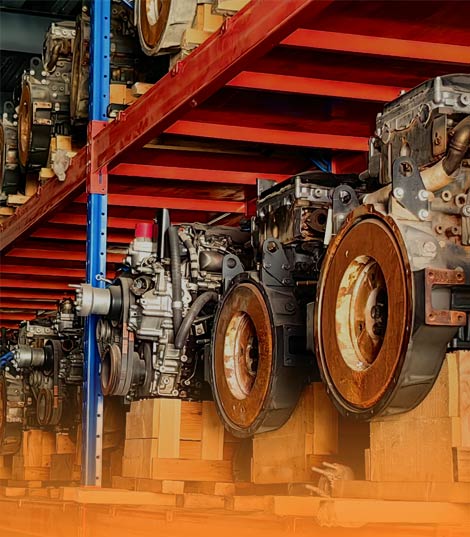
The Engine Overhaul Kit: A Field Guide to the Parts That Bring a Diesel Back to Life
If you read only the category-level numbers, engines look like one line item among many – a slice of a 35-billion-dollar aftermarket that grows as machines age. But the engine is not one thing, and the decision that decides whether a diesel returns to full power or gets retired is the overhaul kit. This article is a field guide to that one part family: the gaskets, bearings, pistons and liners that rebuild a worn engine, what the kit contains, why engines wear, how to read the warning signs, and how to buy a kit so a rebuild restores power instead of repeating the failure. The fleets that win on uptime treat the overhaul kit as a precision parts system, not a commodity, and the 2026 data is forcing everyone else to catch up.
The numbers make the focus obvious. Engine overhaul and rebuild kits sit at the top of the engine aftermarket by revenue, because every high-hour diesel eventually reaches the point where a partial or full rebuild is cheaper than a replacement engine. Field data shows engine-related downtime averaging multiple days per incident when a major internal failure occurs, and that planned overhauls timed to wear measurements cost a fraction of emergency engine replacement. An overhaul-kit search is rarely casual; it is a machine that is burning oil, has lost compression, or a fleet manager planning the rebuild before the engine lets go in the field.
What an Engine Overhaul Kit Actually Contains
An engine overhaul kit is the set of internal wear parts needed to rebuild a diesel to specification. A typical kit includes the full gasket set, main and rod bearings, piston rings, pistons and liners (or sleeve kits), and often valve train components and seals. The precision of these parts – the bearing clearance, the ring tension, the liner finish – is what decides whether a rebuilt engine makes power and burns cleanly. Because the kit rebuilds the very components that wear from combustion and load, it is both critical and vulnerable to poor-quality substitutions. A sound overhaul kit, matched to the engine, is the heart of the rebuild event. When the kit is right, the engine is right; when it drifts, everything downstream reads wrong.
Why Engines Wear: Combustion, Load and Contamination
The dominant cause of engine wear is the combustion environment itself – heat, pressure and abrasive particles in the intake and the oil. Particles reaching the cylinder and bearings cause abrasive wear, and bulk intake or lube oil with high impurity content is the usual source. The fix is not a better kit; it is a better air-and-oil chain – strict filtration to a recognised standard and sampling to catch wear before it becomes failure. Contamination is the root cause that no kit brand can outrun, which is why the fleets with the lowest overhaul rates are the ones that treat air and oil cleanliness as a system, not an afterthought. An engine rebuilt on a contaminated chain scores itself within the interval, and the repair bill grows well beyond a kit swap.
In-Frame vs Out-of-Frame – and the Decision
An overhaul is not one procedure; it is a spectrum. An in-frame (major) overhaul replaces the wear parts – bearings, rings, gaskets, sometimes pistons and liners – without removing the engine from the machine. An out-of-frame (complete) overhaul removes the engine, machines or replaces the block as needed, and rebuilds it fully. The choice depends on the block’s condition: if the cylinder walls and crankshaft are still within spec, in-frame is faster and cheaper; if the block is scored or the crank is worn beyond limit, out-of-frame is mandatory. In 2026 the trend is to measure first – bore, crank, compression – and choose the least invasive rebuild that restores spec, because an unnecessary out-of-frame teardown adds cost without adding life.
Reading the Failure Signals
Engine wear rarely shouts at first. It shows as rising oil consumption, blue exhaust smoke, loss of power, hard starting, low compression on a cold test, coolant loss without an external leak, or metal particles on the lube-oil filter. These are the window in which a rebuild costs a fraction of the alternative: an engine that starts clean and stays clean is the difference between a planned overhaul and a fractured component in the field. Past that window, a spun bearing or a holed piston turns a kit swap into a full engine replacement. The habit that matters is acting on the first symptom, not the last.
Lifespan and the Operating-Hour Planning Figure
As a planning figure, a diesel engine typically reaches its first major overhaul around 10,000 to 15,000 operating hours, but the real trigger is inspection, not the clock. Air quality, oil quality, maintenance and duty swing that range hard: clean-air, well-maintained engines sit at the top; dusty or high-load duty pushes the lower bound toward 8,000 hours. The 2026 pattern is fleets grouping overhaul planning with the high-value engine categories into one planned order rather than reacting to a single low-compression cylinder. Because engines wear predictably as air and oil quality and hours accumulate, an overhaul-kit search is almost always pre-emptive – a buyer ordering ahead of a failure that has not yet started.
Inspection Cadence: Compression, Bore and Oil
The recommended inspection interval for engine condition is a compression and leak-down test every 1,000 to 2,000 operating hours under standard conditions, combined with lube-oil sampling on the same cadence. A useful deeper check measures bore wear and crank run-out to catch internal wear before it becomes failure. Fleets that inspect on this cadence turn the overhaul from a mystery failure into a managed wear event, and the inspection itself is cheap compared with the downtime it prevents. The interval is a guideline; the air, the oil and the duty are the truth.
Installation Discipline
An overhaul kit is only as good as its installation. Clean the block and all passages thoroughly before assembly, because one grain of grit destroys a fresh bearing. Fit new bearings, rings and gaskets to specification, and lubricate every surface with clean assembly lube so it seats rather than scores on first start. Torque every fastener to the engine’s sequence and value – incorrect torque distorts the head and causes leaks or head-gasket failure – and never reuse a stretched bolt or a crushed gasket. Prime the oil system fully before the first start, and watch oil pressure on the initial run. These are not optional finesse steps; they are the difference between an engine that lasts the interval and one that fails on the first job.
Calibration After Rebuild
A rebuilt engine is not run-and-forget. Modern diesels require the injection and timing to be set to specification, and a full functional check after assembly, so the engine makes power and burns cleanly without smoke. Skipping calibration leaves the engine running unbalanced even with perfect internal parts, and the fault reads as a power loss that points at the wrong component. When using a cross-reference or universal kit, verifying injection compatibility and performing the calibration are mandatory, not optional. The calibration is the step that turns a box of precision parts into a smooth, balanced, powerful engine.
OEM, Aftermatter and Reconditioned – and the Quality-Control Caveat
Overhaul kits are sold in tiers: original, high-quality aftermarket, and reconditioned component sets. The right tier depends on the engine and the consequence of a failure, and the deciding factor is not the label but the supplier’s testing and traceability. A kit with no spec data is a gamble on the parts that hold your combustion; a documented, tested kit – whatever its tier – is the one that holds. Fleets that standardise on a few verified references and hold them as buffer stock turn a fragmented, reactive spend into a managed, planned one. The 2026 consensus is to favour complete, documented kits over unverified parts for the engine core.
Tier 4 Final and Stage V Considerations
The engine aftermarket has changed shape with emissions standards. Tier 4 Final and Stage V diesels add aftertreatment and tighter tolerances, which raises the cost of a botched rebuild and makes spec-matched kits more important than ever. A rebuild that ignores the emissions-related components or fits the wrong tolerances can fail compliance and damage the aftertreatment system. Fleets in regulated markets should source kits verified for their exact emissions level and confirm compatibility with the machine’s engine management. The standard is no longer just ‘make it run’; it is ‘make it run clean and compliant’, and the overhaul kit is where that starts.
Climate, Duty and the Wear Curve
The engine wear curve steepens sharply with heat, dust and load. High-temperature, high-dust or high-load operation multiplies wear rates, because heat accelerates deposit formation, dust feeds abrasion into the cylinder and the turbo, and load stresses the bearings. Fleets in these conditions should shorten inspection intervals, insist on pre-cleaning of intake air, and protect the engine from contamination at every service. A machine working in a benign environment reaches the interval comfortably; the same engine in a harsh site reaches it far sooner. The climate and the duty, not the hours on the clock, are the truest predictors of when the overhaul kit is needed.
Storage and Shelf Life
Overhaul kits are precision items even before they are fitted. Store them in a clean, dry, sealed condition, because moisture and grit are exactly what destroy the very bearing surfaces the kit depends on. Keep the protective wraps and seals intact until fit, and never mix kit tiers or references in one bin where a wrong part can be fitted by mistake. A new bearing that has been opened, dropped or stored damp may not seat correctly even though it looks unused. The discipline is simple: rotate stock so the oldest fits first, store it right, and treat the kit as the precision system it is rather than as a hardware afterthought.
Sourcing and Verification
Buying overhaul kits well means matching the kit to the engine’s exact model and emissions level, and preferring suppliers who can confirm the fit and the spec rather than quote by appearance. Kits are specified by bore, stroke, bearing size and emissions tier, and the right unit depends on the engine and the consequence of a failure. Look for documented quality systems, dimensional testing and traceability; a kit with no spec data is a gamble on the parts that hold your combustion. Consolidating overhaul kits with the filters, seals and gaskets they share the engine with, as one order, lowers landed cost and removes the emergency freight that follows a breakdown.
The Mistakes That Cost the Most
The recurring errors are predictable. Reusing old bearings ‘because they look fine’ – internal micro-cracks are invisible. Buying on price and ignoring the supplier’s spec data. Skipping calibration after rebuild. Rebuilding on a contaminated air or oil chain. Ignoring compression readings and blaming the kit. Each turns a cheap, planned overhaul into an emergency engine replacement or a unbalanced powerplant. The discipline that avoids them is simple: clean the air and oil, match the specification, install to torque, calibrate after assembly, inspect on the duty-adjusted interval, and stock the kit before the compression drops.
Conclusion
The engine overhaul kit is the precision parts family that decides whether a diesel returns to full power or gets retired, and it is also among the highest-revenue engine aftermarket categories because, as fleets age and hours accumulate, more engines reach the interval where an overhaul kit either performs or lets the whole machine down. A set of gaskets, bearings, pistons and liners rebuilt to specification, lasting roughly 10,000 to 15,000 hours to first major overhaul in clean service and far less in contaminated duty, vulnerable above all to air and oil contamination, abrasive wear and installation error – it deserves to be understood as a calibrated system, not as a box of spares. Fleets that clean the air and oil, inspect on the duty-adjusted interval, calibrate after rebuild, and hold overhaul kits as buffer stock spend less per hour and avoid the unplanned downtime that a single low-compression cylinder can cause. Racer Machinery supplies brand-new engine overhaul kits matched to your engine’s part numbers and emissions level, with the fit and spec verified, and shipped as consolidated mixed orders to more than one hundred countries, so your next engine rebuild is a scheduled shop job and not a field failure.