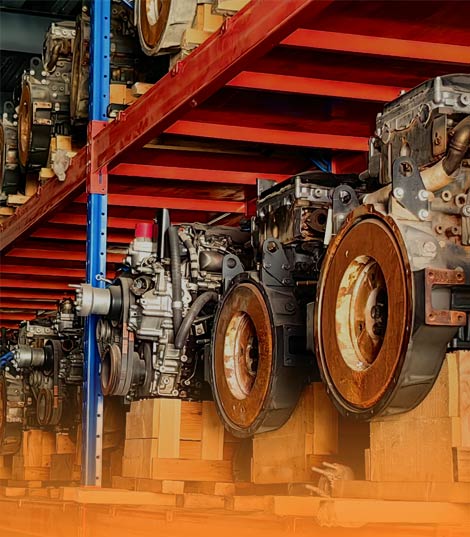
Every excavator in the world is one failed part away from sitting still, and every fleet owner knows the cost of that moment. The machine stops, the crew waits, the schedule slips and the owner pays for the part, the freight and the downtime. In 2026 the parts supply chain that answers that moment is larger, faster and more complex than ever, with sourcing spread across continents, quality grades that vary widely and counterfeit parts that have become a serious commercial problem. For the buyer, the challenge is no longer finding a part; it is finding the right part, at the right quality, at the right price, delivered before the machine loses more money waiting. That is a sourcing strategy, not a purchase, and this article explains how the supply chain works and how to buy from it well.
How the Excavator Parts Supply Chain Is Structured
The parts chain runs in layers from the original manufacturer down to the local dealer, and each layer has a different price, lead time and reliability profile.
Layer One: The Original Equipment Manufacturer
At the top sits the machine manufacturer and its certified parts network. OEM parts are manufactured to the original specification, carry the maker’s warranty and are supported by the dealer network and the machine’s parts books. The price is the highest of any channel and the availability is limited to what the maker has in stock, which for older and less common parts can mean long factory lead times. OEM supply is the reference point for quality, but it is not always the fastest or the most economical answer, and for machines outside their first years of service, the OEM channel is often the slowest route to a replacement.
Layer Two: Licensed and Aftermarket Suppliers
Below the OEM sit two distinct aftermarket groups. The first is licensed or quality-certified suppliers who manufacture parts to the original specifications, often at the same factories or with the same tooling that serves the OEM, and sell under their own brands or as generic equivalents. These parts meet the original dimensions and material grades, carry genuine quality, and cost a fraction of the OEM price. The second group is the broad aftermarket of independent manufacturers, which spans everything from well-engineered copies of simple components, seals, gaskets, filters, fasteners, to parts of uncertain specification. Quality in this layer ranges from excellent to dangerous, and the buyer’s job is to tell the difference.
Layer Three: Traders, Recyclers and Specialists
Below the manufacturers sit the traders and recyclers. Parts traders hold stock sourced from multiple channels, including surplus OEM stock, and serve buyers who need a specific part number quickly. Recyclers and dismantlers supply used original parts from machines being broken for parts, which for older machines can be the only source of an original component at an affordable price. Specialists, the model that Racer Machinery follows, combine deep part-number knowledge with a broad catalog and global shipping, and act as the buyer’s agent across all the channels above.
The Quality Question: Grades, Standards and the Cost of a Bad Part
The central problem in the parts market is that a part number does not guarantee a quality level. The same filter, bearing, seal or hydraulic component can exist in several grades, and the price difference between them hides a much larger difference in service life and failure cost.
Why Grade Differences Exist
A hydraulic filter element may be built with the original filtration media, or with cheaper media that passes the flow test but filters poorly. A seal may be compounded from the original material or from a cheaper rubber that hardens and leaks in months. A bearing may use the original steel and heat treatment or a softer grade that fails early under load. The difference is not always visible; the parts look alike, the dimensions match, and the failure happens later, in service, on the machine. For consumables like filters and seals the price difference is small and the risk is not worth it, because the failure of a cheap filter can take out the pump or engine it protects, at many times the saving.
What a Reliable Supplier Verifies
The mark of a reliable supplier is not a claim of OEM quality but a verifiable specification. The supplier can state the material, the dimensions, the filtration rating or the load rating, and can back the part against the machine application. For critical components, pumps, valves, final drives, the buyer should insist on traceable sources and documented specifications, because the failure of these parts is expensive and the evidence of quality is what separates a genuine equivalent from a risky copy.
Counterfeit Parts: The Scale of the Problem
Counterfeit parts have grown from a footnote into a major problem in the construction machinery industry. The trade is organized, well-funded and increasingly sophisticated, and the parts it produces range from cheap copies of filters and belts to convincing fakes of high-value components with copied packaging, labels and serial numbers.
Where Counterfeits Do the Damage
The damage is not just financial. A counterfeit filter that fails lets contamination destroy an engine or pump, and the repair bill dwarfs the saving. A counterfeit hydraulic hose that bursts under pressure is a safety hazard. Counterfeit electrical components, sensors, controllers and wiring, cause intermittent faults that are almost impossible to diagnose, and they fail at random times in service. For safety-critical parts, brakes, seat belts, lifting components, the risk is unacceptable in any form. The parts most often counterfeited are the ones with the highest volume and margin: filters, belts, seals, bearings, sensors, electrical items and high-value assemblies with recognizable branding.
How to Spot and Avoid Counterfeits
The defenses are practical. Buy from established suppliers with a verifiable history, not from listings that appear and disappear. Compare pricing: a part priced far below the market for the same specification is a warning sign, because genuine-quality parts have a cost floor. Inspect packaging, labeling, part-number engraving and serial-number formats against known-good examples, because counterfeiters copy the part but rarely copy the detail perfectly. And for high-value or safety-critical components, demand documented provenance: source, specification and, where relevant, test certification. A supplier who cannot or will not document the source of a critical part is the wrong supplier for that part.
Lead Times, Stock and the Logistics Layer
The modern parts chain is global, and the buyer’s experience of it is dominated by lead time. A part ordered from the other side of the world can arrive in days by air or in weeks by sea, and the difference is cost. The logistics strategy of a good buyer matches the part to the freight: consumables and planned maintenance items travel economically by sea or consolidated air; critical and breakdown parts travel by express air freight, where the freight cost is trivial compared with the machine’s lost hours.
Stock Strategy: What to Hold and What to Source
The buyer’s stock decision is the heart of the strategy. High-turnover consumables, filters, seals, belts, wear parts, should be held locally in generous quantity, because their demand is steady and their stock cost is low. Medium-value parts with longer lead times should be planned against the maintenance schedule, ordered ahead of the work. High-value, rarely failing components, pumps, final drives, controllers, should be sourced on a confirmed lead time from a reliable supplier rather than carried in stock, because the capital tied up in one such part exceeds the freight cost of several urgent deliveries. The buyer who knows the fleet’s history and the supplier’s lead times can cover the machines with a fraction of the stock a panic buyer carries.
The Freight Decision in Practice
Freight is where the buyer’s judgment is tested. Express air freight for a small critical part can cost more than the part itself, yet it is the right answer when the machine’s hourly cost is higher. For routine orders, consolidating multiple parts into one shipment saves substantially on freight per part, and a good supplier helps the buyer batch orders intelligently, holding parts briefly to ship a complete order rather than splitting it into several expensive shipments. Packaging also matters: seals, bearings and electronics must arrive protected, and a supplier who packs well is a supplier who understands the part’s value.
Regional Supply Chains and the Rise of Chinese Manufacturing
The geography of the parts chain has shifted in the past decade. China has become the manufacturing center of the global construction machinery parts industry, producing not only complete machines but a large share of the world’s aftermarket components: castings, forgings, seals, filters, electrical parts, hydraulic components and undercarriage groups, exported to every continent. The capability is broad, spanning simple consumables and complex assemblies, and the quality range is correspondingly wide. A buyer sourcing from China can find parts at nearly any quality level, which makes supplier verification the decisive step rather than the source country itself.
The practical consequence for the global buyer is choice. Regional distributors hold local stock for fast delivery at a higher price per part. Direct sourcing from Chinese manufacturers offers lower prices and the ability to build a program around a catalog, at the cost of longer lead times, freight management and the need for careful quality control. Many professional buyers combine both: local stock for breakdowns and urgent work, direct program supply for planned maintenance and volume parts. The supplier who acts as the buyer’s agent across both channels, verifying quality, consolidating orders and managing the freight, delivers the economics of direct sourcing with the reliability of a local relationship.
Digital Tools: Catalogs, Platforms and the Role of the Human Expert
The digital layer has transformed how parts are found and ordered. Online catalogs, cross-reference databases and e-commerce platforms allow a buyer to search a part number, compare prices and place an order in minutes, and the largest platforms aggregate thousands of suppliers. The benefit is real: fast search, price transparency and access to stock that was previously invisible. But the digital layer also carries risks. The same platforms are where counterfeit and misdescribed parts trade most easily, and a search that returns a part number does not verify that the part matches the machine application, the build variant or the quality grade.
The human expert still earns the margin. Cross-referencing a part number requires understanding that the same number may exist in different grades, that a superseded number must be traced to its replacement, and that a machine’s build variant, serial range or market can change the correct part. A supplier who answers the hard questions, confirms the application, checks the specification and documents the source is worth more than the price difference against an anonymous listing. The best buying operations use the digital tools for speed and the expert for correctness, which is the combination that keeps the right part arriving at the right machine.
The Modern Buying Strategy: A Practical Framework
Putting it together, a sound parts-buying strategy in 2026 rests on a few principles. Build relationships with a small number of verified suppliers rather than shopping every order, because the relationship produces documented specifications, honest lead times and help when the machine is down. Keep a complete, current parts catalog and machine register, because part-number errors are the most common cause of the wrong part arriving in a hurry. Plan the consumables and scheduled maintenance in advance, and use the freight budget for the unexpected, not for the predictable. Verify the source and specification of every critical part, and treat counterfeits as the threat they are. And measure the supplier by total cost, part price plus freight plus downtime, not by the part price alone, because the cheapest part in the catalog is rarely the cheapest part in service.
Racer Machinery is a dedicated construction-machinery parts supplier covering the full range of excavator engine, hydraulic, electrical, undercarriage and work equipment components, with verified sourcing, documented specifications and worldwide tracked shipping. Send us your part number and machine model, and we will confirm fitment, price and lead time for your requirement, and help you build a parts program that keeps your fleet digging.