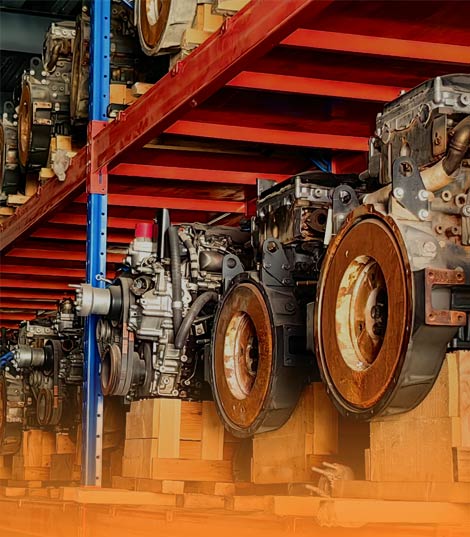
Why Search Trends Are the Best Demand Signal in the Parts Business
Every day, thousands of fleet managers, workshop supervisors and independent owner-operators type the names of replacement parts into search engines and supplier catalogues. Those searches are the most honest demand data the aftermarket has. Nobody searches for a water pump because a marketing campaign told them to; they search because a machine is down, a service is due, or a budget is being planned. Read the search rankings carefully and you can see the entire health of the world’s construction equipment fleet reflected back at you.
In 2026, that signal is unusually strong. The average machine in service is now around twelve years old, equipment delivered during the last expansion cycle is entering its heaviest maintenance phase, and contractors everywhere are choosing to rebuild and maintain rather than replace. The result is a replacement-parts market that keeps setting search-volume records in a set of categories that repeat year after year – because the machines that need them keep getting older, not younger.
This article walks through the ten part families that dominate parts-related searches in 2026, explains why each one is trending, and translates the pattern into practical buying advice. If you manage machines for a living, this list is effectively a checklist of what your competitors are already stocking.
1. Filter Kits – The Perennial Number One
Oil, fuel, air and hydraulic filters remain the most searched replacement parts on any diesel-powered machine, and it is not close. Filters are consumed on a schedule, every machine consumes them, and skipping them converts directly into engine wear. Industry data consistently shows that filtration discipline is the single simplest way to extend engine life, which is why filter kits lead search volume in every region we examined.
Two sub-trends stand out in 2026. First, buyers are shifting from single-piece purchases to complete matched kits – an oil filter, fuel filters and an air filter ordered together, matched to one service interval, so the whole machine is serviced in one visit with one part number list. Second, dusty-environment buyers in quarrying, mining and earthmoving are replacing air filters well ahead of the standard manual interval, because restriction indicators are locking into the red far earlier in high-particulate conditions. The practical takeaway: treat filters as a consumable buffer stock item, and never let a service wait on a filter shipment.
2. Hydraulic Seal Kits and Cylinder Repair Parts
Nearly seventy percent of excavator failures trace back to the hydraulic system, and the most common entry point for that failure is a seal. Boom, arm and bucket cylinder seal kits are among the fastest-growing search categories of 2026, alongside O-ring kits, hose fittings and the small hard parts that turn a leaking cylinder into a same-week repair instead of a replacement purchase.
The reason is economics. A cylinder reseal costs a fraction of a replacement cylinder, needs only a clean bench and a seal kit, and returns the machine to full specification when done properly. As fleets age, the number of cylinders reaching their first or second reseal keeps climbing – and so does search volume. Buyers in 2026 are increasingly ordering seal kits in advance for every cylinder size on their fleet, because a seal kit that arrives after the machine has been torn down is a seal kit that cost a week of rental income.
3. Undercarriage Components – The Matched-Wear Revolution
Track chains, rollers, idlers, sprockets and shoes account for more than half of a tracked excavator’s full-lifecycle maintenance spending, and undercarriage remains the largest single line item in the parts market – worth roughly seven and a half billion dollars this year by industry estimates. What has changed in 2026 is not the demand but the buying pattern: the professional consensus is now firmly that undercarriage replacement is a matched-wear system job.
Replacing only the failed component against worn neighbours guarantees a repeat teardown. A new chain running on worn rollers destroys itself at an accelerated rate; new sprockets chewing against a stretched chain eat both. Fleets that learned this lesson the expensive way now order complete matched sets, and suppliers report that undercarriage searches increasingly specify full sets rather than single pieces. If your undercarriage budget is still spent one component at a time, you are likely paying for the same teardown twice.
4. Fuel Injection Components
Injectors, injection pumps and their related sealing and line parts hold a permanent place near the top of parts searches, and 2026 is no exception. The reasons are mechanical and regulatory at once. Injector wear announces itself early – rough idle, smoke, rising fuel burn, hard starting – and emissions-era engines make injection health directly measurable through fault codes, so more owners catch symptoms while the repair is still an injector swap rather than an engine event.
Fuel quality remains the dominant root cause, especially on remote job sites with unreliable fuel storage. The most durable buying advice in this category has not changed: confirm the calibration specification against the engine serial before ordering, because an incorrect calibration directly affects emissions, performance and fuel economy, and never feed a new injector through a filtration system that killed its predecessor.
5. Turbochargers and Air Handling
Turbocharger searches spike whenever boost pressure drops or a whine appears under load, and those spikes have grown more frequent as the working fleet piles on hours. Most turbo failures trace back to just two root causes – poor lubrication and oil contamination – which is why experienced buyers now replace the oil feed line and change the oil at the same time as the turbo. Feeding a brand-new turbo through contaminated oil shortens its life dramatically and is the most common cause of repeat failure.
Alongside complete turbochargers, searches for the supporting cast – gasket kits, feed and drain lines, clamps and intercooler hoses – have grown steadily through 2026, reflecting a more sophisticated buying public that understands the turbo is a system component, not a standalone part.
6. Cooling System Parts – The Quiet Engine Killer
Water pumps, thermostats, radiators and coolant hoses rank high in search volume for a sobering reason: cooling neglect causes more catastrophic engine damage than any internal design flaw. A blocked radiator or a failed thermostat leads to overheating, head gasket failure and cylinder head distortion – repairs that cost many multiples of the preventive part that would have avoided them.
The 2026 pattern shows preventive replacement moving mainstream. Water pump replacement during major services – with the thermostat and drive belt done at the same time – is increasingly the norm on high-duty machines, and coolant filter searches have grown in step on fleets that run additive-maintained cooling systems. The economics are one-directional: a water pump is among the cheapest rotating parts on the engine, and among the most expensive to ignore.
7. Starters and Alternators – Electrical Rotating Machines
Starting and charging components hold a firm middle position in the search rankings, with a distinctly seasonal pulse: starter searches surge in winter months in cold climates, when marginal batteries, thickened oil and tired solenoid contacts all fail on the same morning. Alternator and charging-component searches track fleet hours year-round, because charging systems work continuously and their bearings, brushes and regulators wear on a schedule of their own.
The buying lesson that keeps repeating in reviews of this category: diagnose the whole circuit before condemning the rotating machine. A starter replaced against a corroded ground path or an alternator replaced against a failing regulator both come back as warranty claims. In 2026, buyers increasingly search for the complete electrical chain – cables, ground straps, relays and solenoids alongside the rotating units – and suppliers who stock the full chain win the repeat business.
8. Sensors, Relays and Wiring Components
As emissions-era engines add electronics, the sensor-and-wiring segment is the fastest-rising climber in the rankings. Pressure sensors, temperature sensors, position sensors, engine harnesses, control relays and diode components all generate fault codes that mimic mechanical failures – which is exactly why they are searched so often. A fleet that misdiagnoses a failing sensor as a failing pump burns money twice: once on the wrong repair and once on the downtime that comes with it.
The professional response in 2026 is buffer stocking. More fleets now hold shelf stock of the sensor and relay families their machines use most, on the theory that a two-hour sensor swap at midnight is only possible if the sensor is already on the shelf. Searches for complete wiring harnesses have grown in parallel as older machines reach the age where original insulation fails faster than the conductors inside it.
9. Ground Engaging Tools and Wear Parts
Buckets, teeth, adapters, cutting edges and liner plates never leave the rankings in mining and quarrying regions, and 2026 volumes are the highest on record, driven by the mining-led construction boom in several developing regions. These are pure consumption items – their replacement frequency is a direct function of operating hours and material abrasiveness – and buyers treat them accordingly, ordering in bulk ahead of the season rather than one tooth at a time.
The interesting 2026 shift is material specification. Buyers increasingly search for upgraded metallurgy – harder alloys, better heat treatment – accepting a higher unit price in exchange for longer wear life, because on a high-hours machine the labor of replacement often exceeds the cost of the part itself.
10. Cab, Glass and Operator-Environment Parts
The quiet riser in the rankings is the operator environment: cab glass, wiper systems, mirrors, seals, steps, handrails and interior trim. Two forces drive it. Older machines accumulate damaged glazing, worn seals and corroded steps exactly as they accumulate engine hours. And in a tight labor market, employers have discovered that cab condition directly affects operator retention – a machine with a cracked windscreen and a sagging seat struggles to keep its operator, whatever its mechanical condition.
Glass searches in particular have grown steadily, and suppliers report that buyers increasingly order complete glazing sets with gaskets rather than single panels, for the same matched-repair logic that has already transformed undercarriage buying.
The Common Thread Across All Ten Categories
Step back from the list and one pattern explains all of it: the world’s construction fleet is old, busy, and being maintained rather than replaced. Every category above is either a scheduled consumable, a predictable wear item, or an age-related failure part. None of them trend because of fashion; all of them trend because machines are accumulating hours faster than they are being retired.
The market data confirms the pattern. The global construction equipment aftermarket stood at roughly twenty-two billion US dollars recently and is projected to approach thirty-eight billion over the coming decade, with engine components representing about a third of that value and Asia-Pacific the largest regional share. Those are not the numbers of a shrinking repair business.
Regional Twists on the Same Top Ten
While the ten categories above dominate everywhere, their order changes with the local fleet profile, and those regional variations are worth reading carefully. In mining-led economies, ground-engaging tools and undercarriage climb to the top of the list and cooling parts follow, because abrasive dust and long duty cycles attack those systems first. In cold climates, starting and charging components jump several places every winter, and filter searches peak with the seasonal maintenance rush. In highly regulated markets, emissions-related components – injection parts, exhaust aftertreatment consumables and the sensors that monitor them – occupy a larger share of search volume than the global average.
The practical use of this variation is planning. A buyer operating across several regions can hold one common core of buffer stock – filtration, seals, electrical consumables – and add only the region-specific categories on top. Suppliers see the same effect from the other side: the orders arriving from each region tell you immediately what kind of machines and what kind of duty are behind them.
Common Buying Mistakes the Search Data Exposes
The search rankings also reveal the mistakes buyers make before they arrive at a supplier. The most expensive is ordering by photograph or memory instead of part number and machine serial – the resulting mismatch is the most common reason a searched part becomes a returned part. The second is buying the cheapest option for a wear-critical component and then paying the labor to install it twice; on high-hours machines, labor usually exceeds part cost, which makes durability the economic choice even at a higher unit price. The third is ignoring the surrounding system: a turbo without its oil feed line, a starter without the ground strap it depends on, an injector fed by filtration that already failed once.
Each of these mistakes is avoidable with the same discipline: buy against the machine’s documentation, buy the complete system where wear is shared, and buy from a supplier who verifies fitment before dispatch rather than after the complaint.
How to Buy Against the 2026 Trend Curve
Three habits separate the fleets that convert this demand data into uptime. First, buffer stock the predictable items – filters, seal kits, hoses, sensors, relays – before regional demand spikes in the second half of the year push lead times out. Second, order matched sets where wear is systemic: undercarriage, cooling overhauls, glazing, electrical chains. Third, buy from suppliers who verify part numbers against the machine’s serial number before shipping, because the single most expensive part in the industry remains the one that arrives and does not fit.
Racer Machinery supplies brand-new replacement parts across every category in this list – filtration, hydraulics, undercarriage, engine components, electrical systems and cab parts – with fitment checked against your machine details and consolidated mixed shipments to more than one hundred countries. If your machines consume it on a schedule, it is already in our catalogue.