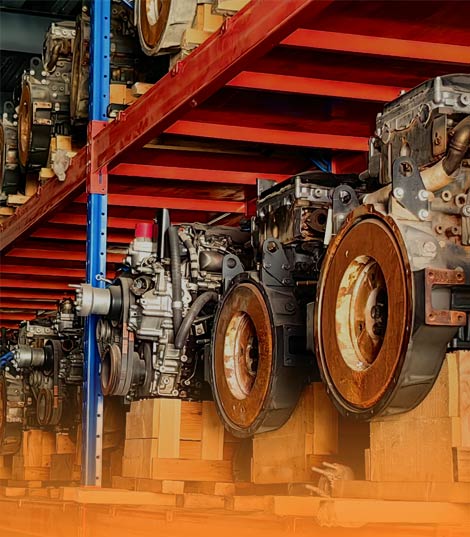
The Engine Air Filter: A Field Guide to the Part That Guards the Combustion Chamber
If you read only the category-level numbers, the air intake looks like a quiet line item on a machine that breathes harder every season. But the air intake is not one thing, and the component that the entire engine’s survival depends on is the air filter – the single barrier between a dust-choked site and a precision combustion chamber. This article is a field guide to that one part: the element that strips abrasive grit from the air before it reaches the pistons, and the part whose condition decides whether an engine delivers productive hours or becomes an expensive teardown. The fleets that win on uptime treat the air filter as the cheapest insurance in the whole machine, not as a disposable can, because as fleets age and duty intensifies, more machines reach the interval where an air filter either protects the engine or lets it grind itself down.
The physics are the whole argument. An engine is effectively a giant air pump – a mid-size unit can swallow several hundred cubic feet of air for every gallon of fuel burned, and every cubic foot pulled from a dusty yard carries grit. That grit, left unchecked, does the quietest and most expensive damage in all of maintenance: it scores cylinder bores, polishes piston rings, loads the oil, and accelerates wear across the bottom end. A clean filter element removes up to 99.9% of particles down to roughly 2 to 5 microns, which is why the filter is not an accessory but the first line of defence for the internals. A filter running below its design capacity does not cause a small, proportional loss; restriction starves the engine of air exactly when load is highest, so the fault shows up as lost power and black smoke under work, not as a clean warning light in the yard.
What an Engine Air Filter Actually Is
An engine air filter is a pleated element built from paper, synthetic fibre, or a paper-synthetic blend, folded into deep pleats to maximise surface area inside a compact housing. Most heavy machines use a two-stage arrangement: a primary element that does the bulk of the filtration, and a safety or secondary element nested behind it that catches any stray particles if the primary is damaged, fitted wrongly, or being changed. Air enters through the intake, hits the pre-cleaner or inertial separator where the heaviest debris is flung out, then passes through the pleats where fine grit is trapped on the media. A restriction indicator – a vacuum gauge or dashboard light on many machines – tells the operator when the media has loaded enough to raise pressure drop to the change threshold. The filter is the gatekeeper of the whole air path, and its condition is exactly what the turbo, the rings and the cylinder walls feel as clean delivery or abrasive wear. When the filter is right, the engine breathes; when it is bypassed, clogged or cracked, everything downstream reads wrong.
Why It Fails: Dust, Restriction and Damage
An air filter fails for a short, well-understood list of reasons, and contamination leads them all. Fine dust packs the pleats on dusty sites and chokes airflow, raising restriction until the engine loses power under load. Water, oil mist or fuel vapour from a poorly maintained breather wets the media and plugs it far faster than dry dust would. Impact and poor fitment crack the element or tear a pleat, opening a direct path for grit straight into the intake. The subtler killer is the safety element that nobody services: because it sits behind the primary, it is often forgotten, yet it is the only thing standing between a failed primary and a destroyed engine. Contamination, restriction and physical damage reinforce each other, and the air filter is exactly where intake-system age shows first. The bill for ignoring it is not a new filter – it is a rebuilt engine.
Reading the Failure Signals Early
The signs of a restricted or failing air filter overlap with turbo and fuel faults, which is precisely why the filter should be the first thing ruled out. A visible restriction indicator at the red mark is the clearest pointer – if the gauge is calling for service, the media has already lost capacity. Power loss and hesitation under load, where the engine sags exactly when you ask for it, is the classic signature of air starvation. Black smoke under load points to rich combustion from an air supply that cannot keep pace with the fuel. A noticeable drop in fuel economy – often 10% to 30% on a badly choked element – is the wallet-level symptom operators notice first. Unusual turbo whistle or lag can follow, because a starved compressor works harder and hotter. The discipline that matters is acting on the first symptom, not the last, because a filter left restricted scores the bores around it and turns a scheduled service into a teardown. The filter is the cheapest part in the air path, so it should also be the first suspect.
Repair or Replace: A Disposable Design
Unlike a hydraulic hose or a radiator, an engine air filter is not repaired – it is replaced. The pleated media cannot be cleaned back to its rated efficiency; blowing it out with compressed air or washing it opens the fibres, distorts the pleats and leaves it passing grit it was built to stop. The only judgement call is whether the housing, seal and pre-cleaner are worth keeping: if the canister is cracked, the lid gasket hardened, or the inertial separator clogged, those get renewed alongside the element. In practice the labour to access and reseal the housing is largely identical whether you fit a premium or a budget element, so the cost gap is mostly the media itself. The decision, then, is never repair-versus-replace the filter – it is fit-a-quality-element-on-schedule versus buy-an-engine, and the second option costs thousands more than the first.
Lifespan, Intervals and the Duty Curve
As a planning figure, an engine air filter is measured in operating hours or distance rather than years, and the honest answer is always the condition of the site and the indicator, not a fixed date. On clean, paved or light-duty work a primary element can run the long end of its service window; in high-dust, demolition, or dry-earthmoving duty the same element can load to the restriction threshold in a matter of weeks rather than months. A useful rule of thumb from fleet data is that severe-dust service can demand attention in the range of 10,000 to 30,000 miles equivalent – or far sooner in extreme conditions – while benign duty stretches well beyond. The 2026 pattern is fleets grouping filter service with the other air-path checks into one planned order rather than reacting to a restriction light, because a filter is almost always cheaper to change than the turbo or engine it protects. The duty, not the clock, is the real predictor of when it needs swapping.
Filter Discipline: The Cheapest Insurance
The single highest-leverage habit for engine life is air-filter discipline. Never run the machine with the intake open or the housing unsealed, because a single gap around the lid bypasses the entire element and pulls raw grit straight into the cylinders. Never attempt to clean and refit the safety element – it is a last-line defence and must go in dry and new whenever the primary comes out. Always reset or note the restriction indicator after a change so the next reading is true, and never ignore a gauge that trips early, because an early trip usually means a torn pleat or a poor seal rather than normal loading. Keep the pre-cleaner ejector and intake snorkel clear of debris so the heaviest grit never reaches the media. The air is the engine’s first fuel; treat its filtration as non-negotiable and the bottom end rewards you with full service life, while neglect turns a manageable item into scored bores no rebuild can fully undo.
Primary and Safety: The Two-Stage Story
Most machines carry two elements, and the discipline is to respect both rather than the visible one. The primary element does the heavy lifting of trapping grit and is the one the restriction indicator watches. The safety element sits behind it and does nothing in normal service – until the primary is damaged, fitted wet, or being changed, at which point it is the only barrier left. The best practice is to inspect the primary on every service, replace it at the restriction threshold, and replace the safety element every time the primary comes out, never cleaning it for reuse. Confirm the primary seal seats fully in its groove and the lid clamps down square, because a twisted gasket is the most common cause of bypass. A two-stage intake is only as good as its worst seal, and a skipped safety element or a crooked lid is a skipped safeguard that the engine pays for in metal.
Sourcing: Shape, Micron Rating and the Part-Number Match
Buying an air filter well means matching it to the machine’s intake, not to a generic ‘looks about right’. The element shape – panel, cylindrical or radial-seal – must match the housing, the overall and sealed dimensions must seat without forcing, and the micron rating of the media must meet the engine’s requirement, because a filter that bolts in but passes the wrong particle size either restricts flow or fails to protect the bores. Verify the part against the machine model and, where possible, the engine serial, and confirm whether the housing uses a radial seal, a gasket flange or a clamp so the new element seats the same way as the original. In 2026 buyers have stopped chasing the lowest price and started demanding correct media specification and fitment confirmation, because a filter that arrives wrong either starves the engine or lets grit through on fit. A filter built for the wrong housing will not seal, and a filter that leaks around the edge damages the engine it was meant to save.
New vs Aftermarket – Match the Specification, Not the Badge
The choice between a complete new filter and an aftermarket unit is not really about the label; it is about whether the specification is matched. A quality aftermarket element built to the same media grade, pleat count and seal geometry as the original – with the same filtration efficiency and restriction characteristics – delivers equivalent protection at a noticeably lower price than a dealership part. The trap is the unverified, drop-shipped unit: a filter with a thinner media, fewer pleats or a soft seal can either plug quickly or, worse, pass grit, and the engine pays the difference in bore wear. The differentiator is whether the supplier can confirm the media efficiency, the sealed dimensions and the fitment, not the badge on the carton. Buy to the machine’s real intake specification and verify the supplier stands behind the filtration performance, because an air filter that looks right but flows or seals wrong is the most expensive kind.
Installation Discipline
An air filter is only as good as its installation, and the installation has one non-negotiable rule: no unfiltered air path. Park and secure the machine, clean the outside of the housing so grit cannot fall into the open intake, then remove the lid and lift the old element straight out without scraping it across the bore. Wipe the housing interior with a clean, lint-free cloth, fit the new safety element if due, then seat the primary squarely in its groove or against its radial seal – never twist it in. Refit the lid and torque the clamps to specification rather than by feel, because an under-tightened lid is a bypass and an over-tightened one cracks the flange. Reset the restriction indicator, start the engine and watch for the gauge to stay green under load. These are not optional finesse steps; they are the difference between a filter that lasts the interval and one that silently bypasses the engine on the first hard pull. Buyers who pair the right element with disciplined installation get the full life; those who rush it buy the same filter twice and the engine once.
Climate, Duty and the Dust Curve
The air-filter failure curve steepens sharply with dust, dryness and impact. High-dust sites – quarries, demolition, dry earthmoving – load the media fast; wind-blown fines penetrate the pre-cleaner; and impact from debris in the intake tract cracks elements and housings. Fleets in these conditions should shorten inspection intervals, service the pre-cleaner at every shift where practical, and protect the intake as carefully as the engine. A machine working in a benign, partly enclosed environment reaches the interval comfortably; the same machine on a dry, open site reaches it far sooner. The climate and the ground, not the hours on the clock, are the truest predictors of when the air filter needs replacing, and planning that ignores them is planning to score a cylinder. A restriction indicator read on a dust-matched schedule removes more unplanned downtime than most category-level plans.
Storage and Handling Before Fitment
Air filters are precision items even before they are fitted. Store them in their sealed wrappers in a clean, dry space, because an element stored open collects the very dust it was built to trap, and a gasket that has dried and cracked may leak from the first hour even though the carton looks unused. Never let a stored filter sit where oil, fuel or water can soak the media, and rotate stock so the oldest fits first. On the bench, confirm the seal and dimensions before mounting – a filter that arrives with a crushed pleat or a hardened gasket will not seat true and will bypass around the edge. The time spent inspecting the element before it goes into the housing is the cheapest insurance against a premature restriction or a leak path straight to the cylinders.
The Mistakes That Cost the Most
The recurring errors are predictable. Running the machine with the intake open during service and dropping grit into the bore. Blowing out a dirty element with compressed air and refitting it, convinced it is ‘good as new’ when the fibres are already opened. Cleaning and reusing the safety element. Twisting the primary into its seal so it never seats. Ignoring an early restriction trip and blaming the turbo. Buying the cheapest unrated can that plugs in a week or leaks around the edge. Skipping the pre-cleaner service so the heaviest grit reaches the media. Reusing a hardened or cracked lid gasket. Each turns a cheap, planned service into scored cylinders, a failed turbo, or an engine overhaul that runs into thousands. The discipline that avoids them is simple: change the primary at the indicator, fit a new safety element every time, seat the seal square, reset the gauge, source to the media specification, and keep the intake sealed at all times.
Conclusion
The engine air filter is the gatekeeper of the entire combustion system and the part that, more than almost any other low-cost component, decides whether precision internals survive their duty or become a teardown. A pleated two-stage barrier of primary media and safety backup, vulnerable above all to dust, restriction and poor fitment, and measured in operating hours or distance rather than years, it deserves to be understood as engineered protection, not as a disposable can. Fleets that keep the intake sealed, service the pre-cleaner on a duty-matched schedule, change the primary at the restriction threshold, fit a new safety element on every open, specify the correct media efficiency confirmed by machine model, and consolidate the air-intake order spend less per hour and avoid the turbo and engine failures that strand a machine mid-project. Racer Machinery supplies brand-new engine air filters matched to your machine’s intake specification and shipped as consolidated mixed orders to more than one hundred countries, so your next filter service is scheduled by you and not by a loss of power under load.