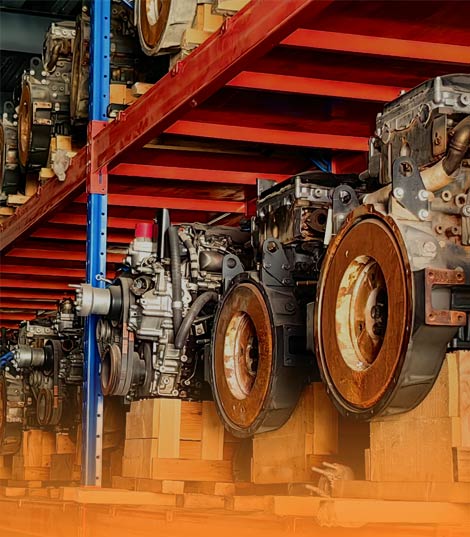
For most of its history, the hydraulic excavator has been powered by a diesel engine. The engine drives the pumps, the pumps drive the oil, and the oil moves the machine. That architecture is being challenged. Electric excavators, powered by batteries and electric motors instead of a combustion engine, have moved from prototype halls to real production machines, and by 2026 they are working on city streets, in tunnels, inside buildings, on ports and in scrap yards around the world. The transition is not happening everywhere at the same speed, and it is not about to replace the diesel fleet overnight. But the direction is clear, and the change is already reshaping what parts buyers need to stock, what service operations look like and what the second-hand market will mean for the enormous existing fleet of diesel machines.
Why Electric Excavators Are Spreading Now
The case for electric excavators is built on several forces that have strengthened together in the last few years, and understanding them explains why the machines are appearing in some sectors far faster than in others.
Emission Rules in Cities and Sensitive Areas
The strongest driver is regulation. Diesel construction equipment faces growing restrictions in urban areas, inside tunnels, at ports, in enclosed industrial sites and near residential districts. Cities that restrict or ban diesel engines on construction sites push contractors toward zero-emission machines, and the same applies to indoor demolition and renovation work where exhaust cannot be tolerated. In these environments an electric excavator is not a luxury choice; it is the only machine that can legally and safely do the work.
Lower Running Cost on the Right Duty Cycle
The economics matter as much as the rules. An electric excavator has fewer moving parts than a diesel machine, no exhaust aftertreatment, no diesel fuel bill and much lower maintenance cost per hour on filters and fluids. Contractors who run machines on repetitive short-duty applications, loading, stockpile work, utility trenching, demolition in one area, report that the energy cost per hour falls sharply compared with diesel. The machines also produce less noise and no local exhaust, which allows night and indoor working windows that a diesel machine cannot use. When those advantages are added together, the total cost of ownership can favor electric on applications where the machine works in one place and can charge reliably.
Battery and Charging Technology Reaching a Practical Level
The technology has reached the point where a production electric excavator can work a meaningful shift. Battery energy density, motor efficiency and thermal management have improved steadily, and manufacturers now offer machines from compact mini-excavators up to large units with battery capacities that support several hours of productive work on typical cycles. Fast-charging capability allows a machine to be topped up during breaks and lunch, and some operations use multiple machines sharing a charging schedule. The technology is no longer the limiting factor for the applications where electric machines fit best.
How the Machines Are Built: What Is Inside an Electric Excavator
An electric excavator keeps the familiar structure of the machine, the boom, arm, bucket, swing gear, tracks and hydraulic cylinders, but replaces the heart of the machine. Understanding what changes and what does not is the key to understanding the parts story.
The Powertrain: Battery Pack, Inverter and Drive Motors
Instead of an engine, the electric machine carries a battery pack, power electronics and electric motors. The battery pack is typically mounted in the counterweight or in the space where the engine used to sit, sized to balance the machine as well as to store energy. The electric motor drives the hydraulic pumps either directly or through a gearbox, so the hydraulic system itself remains largely conventional: pumps, valves, cylinders and motors still do the heavy work of moving the boom and tracks. Some machines use electric swing motors that recover energy when the upper structure decelerates, and the recovered energy is fed back into the battery, a feature that measurably extends runtime on swing-heavy work like truck loading.
What Stays the Same: The Hydraulic and Undercarriage Systems
The parts that wear are mostly unchanged. The hydraulic pumps, control valves, cylinders, hoses, swing gear, final drives, track chains, rollers, sprockets and bucket teeth are the same categories of components as on a diesel machine, and they wear by the same mechanisms: heat, pressure, contamination and abrasion. A contractor running an electric excavator on the same work as a diesel machine should expect the same hydraulic and undercarriage parts consumption. The change is in what surrounds the powertrain, not in the ground-engaging and oil-moving systems that dominate the parts market.
What Changes: High-Voltage Electrical Components
The new layer of parts is electrical: battery modules, battery management systems, inverters, DC-DC converters, charging ports, high-voltage cables and connectors, coolant pumps for battery thermal management and the software that coordinates them. These are high-value, electronically matched components. Battery modules and power electronics are rarely serviced in the field; they are managed by the manufacturer through diagnostics and replaced as assemblies. But the supporting components, coolant lines, pumps, contactors, connectors and low-voltage harnesses, fail in service and are becoming a growing category in the parts market.
Charging Reality on Site: What Buyers Need to Plan For
The practical question that decides whether an electric excavator works is not the machine; it is the charging plan. Contractors who succeed with electric machines treat charging as part of the site layout, not an afterthought.
Charging Options: AC Slow, DC Fast and Battery Swapping
There are three charging paths in use. AC slow charging, typically overnight or during long breaks, is the simplest and cheapest, and it suits machines with a defined daily cycle. DC fast charging tops up a battery in a fraction of the time, which supports machines working multiple shifts or running long days with short breaks. Battery swapping, where a depleted pack is exchanged for a charged one in minutes, is used in the mini-excavator and small machine segment and in operations with several machines, where a small number of charged packs can serve a fleet. The right choice depends on the duty cycle, the power available on site and the number of machines sharing the charging equipment.
Grid Capacity and Site Power
The hidden cost of an electric fleet is grid capacity. A large excavator on fast charge can draw power comparable to a small commercial building, and many sites do not have that power available at the connection point. Contractors are installing dedicated transformers, battery energy storage buffers that charge slowly from the grid and discharge fast into the machine, and smart charging systems that spread the load across machines and the time of day. Buyers should budget for the charging infrastructure as part of the machine purchase, because it is often the real constraint on how many electric machines a site can run.
Runtime Planning and the Duty Cycle
Runtime is determined by the duty cycle more than by battery size. Idle time, travel, hydraulic load and swing work all draw at different rates, and the same machine can run a full shift on light utility work and only part of a shift on heavy digging with long travel. Successful operations match the machine to the work: electric machines are assigned to applications with predictable cycles, while diesel machines cover the heavy, long-travel and remote work. The result is a mixed fleet, and the parts buyer supports both halves of it.
The Parts Market in the Transition: What Changes and What Grows
For parts buyers, the electric transition changes the mix of demand without changing its foundation. The conventional systems still produce the bulk of the parts consumption, while a new electrical layer grows on top.
Conventional Parts Demand Continues
The electric machine is still an excavator. Hydraulic filters, oil, seals, hoses, pumps, valves, cylinders, final drives, track groups and work equipment all remain in the parts program. The engine-specific parts, fuel system, air intake, exhaust aftertreatment and engine electronics, disappear from the electric machine, but they remain in the fleet for as long as diesel machines keep working, which is decades. The parts buyer’s conventional catalog does not shrink; it simply stops growing on the electric side while continuing to serve the diesel fleet.
New Electrical Parts Categories
On top of the conventional program, the electric fleet adds new categories: high-voltage cable and connector repair kits, battery thermal management components such as coolant pumps and hoses, contactors and relays, DC-DC converters, charging port assemblies and low-voltage harness sections. These components fail in service, especially connectors and cables exposed to vibration, dust and the constant flexing of the machine, and the aftermarket is building supply for them. Prices are higher than conventional electrical parts, and fitment is tighter, so verifying the exact part number and machine configuration matters more.
Battery Health and the Second Life Question
The battery is the most valuable component on the machine, and its health determines the machine’s value and service life. Battery degradation is driven by charge cycles, depth of discharge, temperature and time, and operators track state of health through the machine’s telematics. As early electric machines age, the market is developing for battery reconditioning, module replacement and, eventually, battery second-life applications in stationary storage. For the parts buyer, the practical point is that battery-related service is a specialist activity, usually handled through the manufacturer, while the supporting electrical and hydraulic systems remain the accessible service territory.
The Economics of the Transition: Total Cost of Ownership
Buyers evaluating an electric excavator are increasingly working from total cost of ownership rather than purchase price, and the comparison is not as simple as it looks. The electric machine typically carries a higher purchase price than the equivalent diesel, reflecting the battery and power electronics, while the running costs move the other way: no diesel fuel, lower energy cost per hour on suitable duty cycles, reduced filter and fluid consumption, and lower spend on the engine maintenance that dominates the diesel service program. The machine also offers operational advantages that do not appear on the invoice, quieter working that opens night and indoor windows, zero local exhaust that satisfies the strictest site rules, and lower vibration that operators appreciate on long shifts.
The decisive variable is utilization. An electric machine working a steady, predictable cycle with reliable charging will amortize its price premium quickly and then run cheaper per hour than diesel for the rest of its life. The same machine used erratically, with long idle spells, poor charging discipline and heavy travel between distant work sites, will not. The fleet owner’s job is to match machine to duty, and the successful mixed fleets of 2026 are built on exactly that analysis: electric machines assigned where their economics work, diesel machines kept where they still win. The parts buyer inherits the result, a fleet with two powertrains and two parts profiles, and serves both from the same discipline of correct part numbers and planned supply.
What the Fleet Looks Like in 2026
The fleet picture is one of layering rather than replacement. The global installed base of excavators is overwhelmingly diesel, and it will remain so for many years because the economics of replacing a healthy diesel machine rarely work. Electric machines are being added at the margin: compact machines for urban and indoor work, machines for regulated environments, machines for operators with clear charging economics, and a growing segment in infrastructure projects that specify zero-emission equipment. Within that, the mini-excavator and small machine segment has moved fastest, because battery cost and weight are manageable at small sizes, the duty cycles are short and urban, and indoor and residential work values quiet operation. Large electric excavators are fewer and concentrated in mines, ports and quarries where grid power exists and the duty cycle suits charging schedules. In every segment, the transition is a market force that parts buyers should track, even as the conventional diesel fleet remains the foundation of the business.
What Parts Buyers Should Do Now
The practical strategy for parts buyers is to support both halves of the fleet. Maintain the full conventional program, filters, hydraulic, undercarriage and work equipment, because the diesel fleet is large, aging and will consume parts for decades. Add the electrical layer as electric machines enter the fleet, starting with the components that actually fail in service: connectors, cables, coolant system parts and low-voltage electrical items. Record machine configurations and software versions, because electric and electro-hydraulic parts are matched to the machine build. And plan the charging and battery program with the same discipline as the machine program, because infrastructure is where electric fleet projects succeed or fail. Buyers who cover the conventional and the electric sides together will be well placed as the fleet transitions, whichever way the market moves in the coming years.
Racer Machinery is a dedicated construction-machinery parts supplier covering the full range of excavator engine, hydraulic, electrical, undercarriage and work equipment components for both conventional and new-energy machines. We confirm the part number against your machine application and ship worldwide with tracking. Send us your part number and machine model, and we will confirm fitment, price and lead time for your requirement.