The 2026 Parts Mix: What Поиск Data Reveals About What Fleets Actually Buy
Every year the aftermarket publishes its sizing numbers, and every year they say roughly the same thing: the world will spend tens of billions on excavator and earthmoving spares. The interesting story is not the total. It is the mix – which categories climb the search rankings, and what that movement says about how machines are actually being kept alive. Read the search data for 2026 and a clear picture emerges: buyers are concentrating spend on the few systems that dominate lifecycle cost, and a new set of components is entering the list because the machines themselves are changing.
This article reads the 2026 parts picture as the search volumes reveal it, separates the durable demand from the passing fad, and turns the pattern into a practical buying plan. It is written for the people who place the orders – fleet managers, workshop supervisors and procurement leads – not for a spreadsheet.
Undercarriage: Still the Largest Lifecycle Cost
The single largest line item in the aftermarket remains undercarriage, estimated at well over seven billion dollars globally this year and accounting for more than half of an excavator’s full-life maintenance spend. Track chains, rollers, sprockets, idlers and track shoes are consumables by nature: they wear with hours, not with calendar time, and they wear fastest in abrasive conditions.
The search signal that matters is not the individual part – it is the phrase ‘matched set’. Buyers are increasingly searching for complete undercarriage kits rather than single pieces, because replacing one component against worn neighbours guarantees a repeat teardown. A new chain on worn rollers, or new sprockets on a stretched chain, destroys itself at an accelerated rate. The search data shows the market learning this lesson in real time, and ordering the whole wear system together.
Hydraulics: Where Most Failures Actually Happen
The second movement is hydraulic, and it is the largest by failure count rather than by value. Industry data puts roughly seventy percent of excavator failures in the hydraulic system, and the fastest-growing search categories of 2026 are seal kits and cylinder repair parts. That is not a coincidence: cylinders sit at the harshest point of the machine, and their seals and chrome rods wear continuously.
The buyer response visible in the search data is pre-positioning. Seal failure is predictable, so fleets that order seal kits ahead of need turn a same-week repair into a planned afternoon. The same logic applies to hoses and fittings, which fail from pressure cycling and abrasion; a failed hose at high pressure is both an operational stop and a safety event, so the parts that prevent it belong in buffer stock, not in an emergency order.
Engine Overhaul Kits: The Largest Revenue Segment
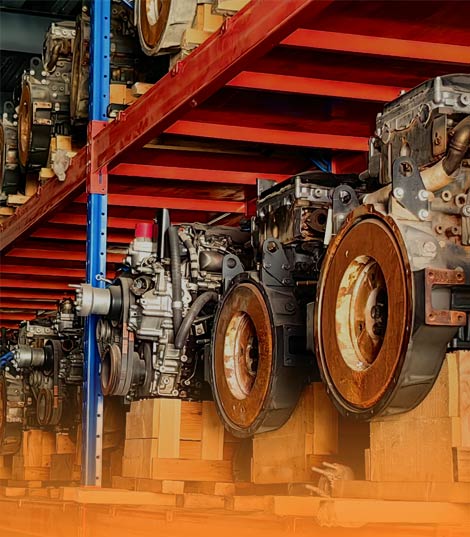
Engine components remain the biggest segment by revenue, and overhaul kits lead it. The search data shows steady, high-value demand for liners, pistons, rings, bearings and full gasket sets – the matched package that restores factory compression and oil control on a high-hour engine. Tighter emissions rules have made fuel-injection, exhaust-gas-recirculation and aftertreatment parts stable, high-value categories that buyers return to again and again.
The lesson for procurement is that overhaul demand is planned, not spontaneous. Engines reach their overhaul threshold on a known hour count, so the kits can be ordered against the calendar rather than the breakdown. Fleets that treat overhaul kits as a scheduled purchase hold the parts before the machine comes in, and the workshop plans around them instead of waiting on them.
Reman Versus New: The Debate the Data Keeps Open
A persistent thread in the 2026 search data is the comparison between remanufactured and new. For high-value rotating parts – connecting rods, cores, long blocks – remanufactured units close much of the performance gap at a fraction of the cost, and for some categories reman can cut spend by thirty to forty percent. For major hydraulics such as main pumps and travel motors, complete new assemblies are increasingly preferred, because labour is scarce, downtime is expensive, and the reliability premium of a new unit is usually worth the difference.
The practical reading is that the new-versus-reman choice is not ideological. It follows the risk profile of the component: rotating and structural parts where a second failure is catastrophic favour new; consumable and repairable parts where a known-teardown path exists favour reman. The search data simply shows buyers weighing that trade-off more explicitly than before.
The Electrification Shift: A New Column in the Spares List
The most important structural change in the 2026 mix is electrification. As machines move to electric and hybrid drives, the parts ecosystem expands: batteries, inverters and electric motors join pumps and valves as components that wear, fail and need replacement. The search data is early but unmistakable – a rising volume of queries around electric-drive components, and a clear interest in suppliers whose catalog covers both conventional and electro-hydraulic systems, because the two will work side by side for the next decade.
For buyers this means a forward-looking question: will the parts I need in three years still be available from the source I use today? The fleets that answer that now – by building relationships with suppliers who already cover the electro-hydraulic mix – avoid a painful gap later. The 2026 search data is the first signal of where that gap will open.
Compact and Mini: A Quietly Growing Slice
Beneath the headline categories, the search data shows above-average growth in compact and mini-excavator components – track systems, hydraulic actuators, swing components and attachments. Urban construction, landscaping and utility work are pushing the installed base of small machines up, and every machine added is a future parts customer. The implication for stockists is that the small-machine catalog is no longer a sideline; it is where the next wave of demand is forming.
Filters and Lubrication: The Quiet Multipliers
Beneath the headline categories sits a group that never trends but never stops: filtration and lubrication. Поиск volumes for filters, filter heads and seal-supported service kits are steady year-round because their replacement interval is driven by hours and contamination, not by drama. Fleets that treat filters as a scheduled consumable – ordered in depth, changed on the clock – avoid the cascading damage that a clogged or bypassed filter causes downstream in the engine and hydraulic circuit.
The 2026 data shows buyers grouping filtration with the high-value categories into a single planned order rather than ordering it reactively with the failure. That is the right instinct: a filter is cheap, the damage from skipping it is not, and the part itself is perfectly suited to buffer stock. The fleets that get this right rarely experience a filter-related failure, because the part is always there on schedule.
Swing and Travel Systems: The Underestimated Wear
Two systems that the search data underrates are swing and travel. Swing bearings, swing motors and travel-gear components sit in the dirtiest, most load-cycled part of the machine, and their failure turns a productive excavator into a stationary one. Query growth for swing seals, travel motors and final-drive parts points to a maturing awareness that these components deserve pre-emptive stock rather than emergency response.
The lesson mirrors undercarriage: these are wear systems whose neighbours matter. Replacing a swing seal against a pitted bearing race repeats the teardown, just as a new chain on worn rollers does. Поиск behaviour in 2026 increasingly reflects buyers ordering the related set together, which is exactly the discipline that protects uptime on the rotation systems.
Attachments and the Long Tail
The final movement worth naming is the long tail of attachments – couplers, thumbs, breakers, grapples and the pins and seals that connect them. No single attachment dominates the search curve, but together they represent a large, fragmented demand that grows with the machine base. The implication for stockists is to treat attachments as a managed category with its own fitment rules, because an attachment that does not fit the linkage is useless regardless of price.
What unites every category in the 2026 mix is fitment discipline. Whether the part is a multi-billion-dollar undercarriage component or a small seal, the cost of getting it wrong is the same: a machine stopped, a bay occupied, and a freight charge in both directions. The search data does not say this aloud, but it is the subtext of every query: buyers are not just looking for a part, they are looking for the right part for their machine.
Turning the Mix Into a Buying Plan
The value of reading the 2026 parts mix is not academic. Three habits separate the fleets that minimise downtime this year. They order matched wear sets instead of single parts, because the data is unambiguous that piecemeal undercarriage replacement repeats the teardown. They hold buffer stock of predictable service items – filters, seal kits, hoses, rollers – before the second-half demand surge, because those failures are forecastable. And they buy from suppliers who verify part numbers against the machine’s serial before shipping, because approximation is the most expensive mistake in the hydraulic and engine categories.
What the Поиск Data Cannot Tell You
A caveat worth stating: the global search curve is an average. Your fleet’s mix is its own, shaped by the machines you run, the ground you work and the climate you operate in. The 2026 data is a strong prior, not a substitute for your own records. The fleets that combine the market signal with their own order history get the best of both – they know the market is shifting to electro-hydraulic parts, and they know which of their own machines will need them first.
The practical move is to keep a running note of what your machines actually consume. A workshop that records, per machine, the parts it has replaced and the hours at which it replaced them, builds a private demand curve that outperforms any published average. When that private curve is laid alongside the market signal, the order book writes itself: the market tells you the category is climbing, and your records tell you which machine crosses the threshold next. The search data opens the question; your own history closes it.
The Cost of Ignoring the Mix
The penalty for ignoring the parts mix is paid as emergency freight and lost availability. The part that is climbing the rankings is the part everyone else is about to need; order it during the quiet weeks and it arrives by sea on schedule, order it during the surge and it waits in a queue behind every other fleet. The part is identical. The outcome is not.
Building the Right Relationship
The supplier question follows directly from the mix. A source that covers undercarriage, hydraulics, engine and the emerging electro-hydraulic range, that verifies fitment before dispatch and that ships one consolidated mixed order, lowers the landed cost per part and turns several uncertain deliveries into one managed one. The 2026 search data does not name suppliers, but it makes the selection criteria obvious.
What This Means for Procurement Teams
For a procurement lead, the parts mix changes the job from reactive to planned. Instead of fielding urgent requests during a peak, the team spends the quiet weeks building the orders that will satisfy the peak, and the urgent requests that remain are genuinely exceptions rather than the norm. That shift reduces stress, lowers cost and improves the relationship between the workshop and the storeroom, because parts are there when the machine comes in rather than promised for next week.
Conclusion
The 2026 parts mix is one of the most honest demand signals the aftermarket produces. It tells you, category by category, what fleets everywhere are about to need – undercarriage as the dominant lifecycle cost, hydraulics as the dominant failure source, engine overhaul kits as the revenue anchor, and electrification as the new column in the spares list. Buyers who align their stockrooms to it spend the year’s demand growth on uptime rather than on freight and waiting. Racer Machinery supplies brand-new undercarriage, hydraulic, engine and electrical parts across the conventional and electro-hydraulic range, with fitment verified against your machine details and consolidated mixed shipments to more than one hundred countries, so your stockroom can stay one step ahead of the mix.