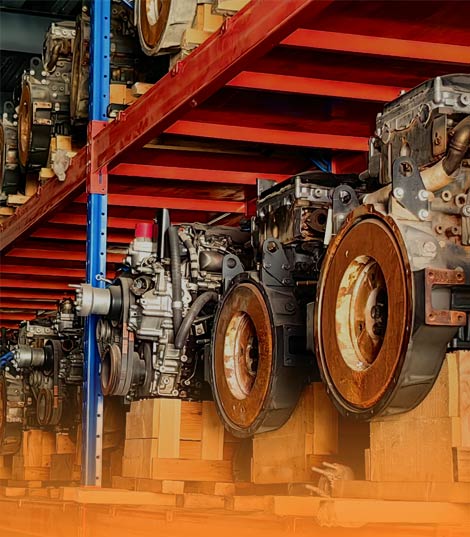
Engine Air Compressor: A Field Guide to the Component That Keeps the Air System Alive
When buyers search for a single engine-driven component in 2026, injectors and turbos take most of the traffic, but a quieter machine sits behind a large share of brake-system and air-tool failures: the engine air compressor. The reason is unforgiving. On any machine or truck that works on compressed air – brake chambers, suspension, controls, pneumatic tools – the engine-mounted air compressor is the only source of that air, and when its output falls, the pressure build time stretches, the governor cycles constantly and, in the extreme, the machine fails its build-time standard and comes off the road. Slow pressure build is one of the most common air-system complaints in any workshop, and the compressor sits at the top of the suspect list for exactly that reason. This article is a field guide to that one component: how it works, why it fails, how to read the early signals, and how to buy and fit a replacement that restores the air system’s discipline instead of repeating the fault.
The demand curve behind the search is structural. The installed base of air-braked machines and trucks keeps aging, and 2026 buying guides put the compressor at the top of the air-system replacement list, paired with the governor and the air dryer as a system rather than as loose parts. The pattern shows compressor searches rising together with build-time failures and oil-carryover complaints, because buyers have learned that the three components age together: a worn compressor pumps oil into the dryer, a saturated dryer loads the compressor with moisture, and a mismatched governor short-cycles both. An air-compressor search is increasingly a decision made after a failed build-time test, which makes preparation valuable: the compressor is far cheaper to hold on the shelf than to discover missing during a brake inspection that the machine cannot pass.
What an Engine Air Compressor Actually Does
An engine air compressor is a small reciprocating pump driven by the engine’s gear train, belt or chain, and its job is to keep the air system charged from empty to full, on demand, for the life of the machine. It draws filtered air, compresses it in one or two cylinders, and pushes it through a discharge line to the air dryer, which strips moisture before the air reaches the reservoirs. A governor watches system pressure and switches the compressor between two states: pumping, below the cut-out setting, and unloaded – holding the valves open or bypassing the intake – once the cut-out pressure is reached. What matters for machine performance is that the compressor is sized to the system’s demand: its rated displacement must refill the reservoirs from cut-in to cut-out within the machine’s build-time standard, and keep up with the air consumed by brakes, suspension and accessories during work. The compressor also runs hot – it compresses the same air dozens of times a minute – and it depends on engine lubrication and a clear discharge path. It is the component the entire air system leans on, and it does it continuously, at engine temperature, for hundreds of thousands of hours.
Why Air Compressors Fail: Wear, Carbon, Mismatch and Moisture
Air-compressor failures trace to a short list, and internal wear leads it. Rings, cylinder walls and valve seats wear with hours, and a worn compressor loses output exactly when the system needs it most: the build time stretches, the governor calls for air more often, and the machine spends more and more of its life in the pumping state. Carbon and oil coking is the second cause: compressor discharge temperatures are high, and oil carried past worn rings bakes into hard coke inside the discharge line and the discharge valve, restricting flow and pushing temperatures higher still – a feedback loop that ends with a blocked line or a burnt valve. Governor mismatch is the third: a governor set outside the system’s calibrated cut-in and cut-out pressures makes the compressor short-cycle, and every short cycle is a heat cycle that ages the valves and the desiccant downstream. Contaminated intake air is the fourth: a failing intake filter or a leaking intake seal feeds grit straight into the cylinders. Moisture is the fifth: a saturated air dryer stops stripping water, and the water reaches the compressor’s discharge side and the system’s valves, corroding everything it touches. The common thread is that the compressor is the hardest-working component in the air chain, and every weakness in filtration, cooling, governor calibration and dryer health lands on it first.
Reading the Failure Signals Early
A failing air compressor gives warnings long before it fails a brake inspection, and reading them early is the difference between a planned swap and a machine off the road. The first signal is build time: pressure that takes noticeably longer to rise from empty to full, or that will not reach the cut-out setting at rated speed, is announcing falling compressor output, and the machine’s build-time standard makes that a testable number, not a feeling. The second is cycling: a compressor that pumps almost constantly, or a governor that cycles far more often than it used to, points at worn output, an air leak or a governor drifting out of calibration. The third is oil in the system: oil in the dryer cartridge, oil staining at drain valves or sludge in the air lines says oil is passing the compressor’s rings, and a compressor that pumps oil will eventually coke its own discharge line. The fourth is heat: a discharge line that is abnormally hot, or one with hard, coked deposits inside when inspected, says the compressor is working far harder than designed. The fifth is noise: knocking or rattling from the compressor that changes with engine speed points at internal or drive wear. The sixth is the test evidence: a timed build-up test at rated speed, an output check, and an unloader-function test convert suspicion into numbers. Catching the slow-build stage allows an orderly replacement; catching it after a failed inspection means the machine is down and the decision is made under deadline pricing.
Specifications: Output, Drive and the Pressure Settings
Buying an air compressor well means matching the system’s design, not just the mounting. Displacement and output are the first gate: the compressor’s rated delivery must match the demand the machine was built around, and an undersized unit will chase build-time failures forever while an oversized one runs unloaded and unhappy. The drive is the second: gear-driven, belt-driven and chain-driven compressors turn at different ratios and in different directions, and a unit fitted with the wrong drive or rotation delivers a fraction of its rating or destroys its drive. The cylinder configuration – single or twin – decides whether the unit can hold up under continuous high-demand duty, and machines fitted with twin-cylinder units from the factory lose margin when a single is substituted. The pressure settings are the third: the governor’s cut-in and cut-out settings must match the compressor and the system design, because settings that are too close make it short-cycle and settings that are too far apart leave the system vulnerable between charges. The mounting, the port orientation and the cooling method – air-cooled fins or water-cooled jacket – decide whether the unit fits, seals and stays alive at working temperature. The same engine family can carry different compressor specifications across build years and duty ratings, so the stamped reference and the engine serial number are the first references and the only reliable ones. In 2026 professional buyers demand the reference, the rated output and the drive specification in writing before ordering, because a compressor that bolts in but cannot hold build time is not a spare – it is a failed inspection waiting to happen.
New, Reconditioned or Cheap: Reading the Real Differences
The air-compressor market has three tiers, and the gaps are larger than the prices suggest. A new compressor built to the original displacement, drive and pressure specification carries the highest cost and the lowest risk, and for a machine whose safety system depends on its output it is the safe path. A quality reconditioned unit from a specialist with documented bench results – output at rated speed, pressure hold, unload function and no oil carryover – can deliver most of the new-unit life at a lower price, but only when the testing is real and stated; a cleaned pull in a box with no bench record is a coin flip. The bargain tier, unbranded units with unknown output and no pressure verification, is where repeat failures live: rings that never held output, valves that burnt in the first months, and drives that ran hot because the rotation was wrong. The differentiator is not the label but the verification: a stated output curve, a stated pressure setting and a warranty measured in operating hours. On a component whose failure mode is a machine that cannot build air, the cheapest tier is the most expensive one.
Installation Discipline: Cleanliness, Pairing and the Discharge Line
Most replacement compressors that fail early are killed during installation, and the causes are all preventable. Protect cleanliness above everything, because grit drawn through a carelessly opened intake or a dirty mounting face scores cylinders and valves before the first hour is out. Prime the lubrication feed correctly on assembly, because a compressor run dry at first start scores its bores permanently. Inspect the discharge line and replace it if it shows any coking, because the carbon that killed the last compressor is sitting in that line waiting to restrict the new one – and a restricted discharge line overheats a healthy unit within weeks. Pair the compressor with a correctly calibrated governor, because the settings decide how the unit cycles, and mismatched settings are a leading cause of early failure. Check the air dryer cartridge and replace it if saturated, because a moisture-loaded dryer hands its water to the whole system and loads the new compressor with corrosion. Torque the mounting and the drive correctly, confirm rotation and alignment, then fill, bleed and run a timed build-up test before the machine returns to work, watching for leaks at every joint. Fleets that follow this discipline get years from a compressor; those that swap the unit into a coked, moisture-loaded system buy the same failure twice.
Duty, Climate and the Stocking Curve
Compressor life is a duty and climate story as much as an hours story. Long-idle duty is the hardest: a machine that idles for hours runs its compressor at low speed where oil carryover is worst, and carbon builds in the discharge path while the system barely cycles. Humid climates load the air dryer hard, and a dryer that cannot keep up passes moisture to everything downstream, compressor included. Dusty sites raise the stakes on intake filtration, because a filter that is overdue in a quarry feeds grit straight into the compressor’s bores. High-demand duty – frequent brake applications, air tools, air suspension – keeps the compressor in the pumping state, and pumping is when it wears. The service-hour meter matters less than the duty profile, the dryer health and the filtration discipline, and a stock plan that ignores those three factors plans its own build-time failure. Holding a matched compressor, governor and dryer cartridge for every air-braked machine converts the most common air-system failure from an inspection stop into a scheduled half-day job.
Storage and Handling Before Fitment
A compressor on the shelf is a sealed precision pump, not a casting. Store units in their original sealed packaging, dry and away from contamination, with every port capped, because a compressor that has breathed dusty air or drawn moisture in storage has already used part of its life. Rotate the shaft gently by hand before fitting to confirm free movement, and never test-run a spare compressor loose on the bench without its correct lubrication and discharge path. Before fitting, confirm the reference, the rated output and the drive specification against the engine’s requirement, check the mounting face and the drive for transport damage, and inspect every cap and plug before it comes off. A compressor damaged in storage fails identically to a defective one, and both cost a machine that cannot pass its build-time test.
The Mistakes That Cost the Most
The recurring errors are predictable and expensive. Replacing the compressor without finding what killed it, so a coked discharge line or a saturated dryer hands the new unit the same death. Skipping the governor pairing, and short-cycling a healthy compressor to failure within months. Buying an untested bargain unit for a machine that must pass inspection, and fitting a second one after it fails the build-time test. Reusing an oil-soaked intake filter or a leaking intake seal, and feeding grit straight into new bores. Running the new compressor dry at first start because the lubrication feed was not primed. Ignoring oil in the air lines and letting the coke build until the discharge path blocks. Each turns a planned air-system service into a repeat failure or a failed inspection. The discipline that avoids them is simple: match the reference, output and drive, replace the discharge line and the dryer cartridge alongside the governor settings, prime and test properly, and treat every slow build-up and every trace of oil in the system as a scheduled compressor window rather than background noise.
Conclusion
The engine air compressor is the quiet workhorse of the 2026 air-system aftermarket, and it is the component every brake chamber, suspension bellows and pneumatic tool depends on. A small reciprocating pump running continuously at engine temperature, vulnerable above all to internal wear, oil coking, governor mismatch and moisture, it deserves to be treated as a planned, verified replacement rather than a breakdown purchase. Fleets that match the reference, output and drive specification, replace the discharge line and the dryer cartridge alongside it, pair it with a correctly calibrated governor and read the slow-build, constant-cycling and oil-in-system signals early spend less per hour and avoid the failed inspections and road calls that strand machines on site. Racer Machinery supplies brand-new engine air compressors and matched air-system components verified against your engine’s reference and output specification, with bench data confirmed before shipment and consolidated mixed orders shipped to more than one hundred countries, so your next air-system programme is scheduled by you and not by a compressor that quit under load.